
Last updated September 10, 2026
Level 1 sweep and inspection to the NFPA 211 annual standard - flue, crown, cap, and flashing checked and photographed
Chimney sweep logs do not sweep chimneys. They loosen some creosote - which then falls where a brush and vacuum still have to collect it.
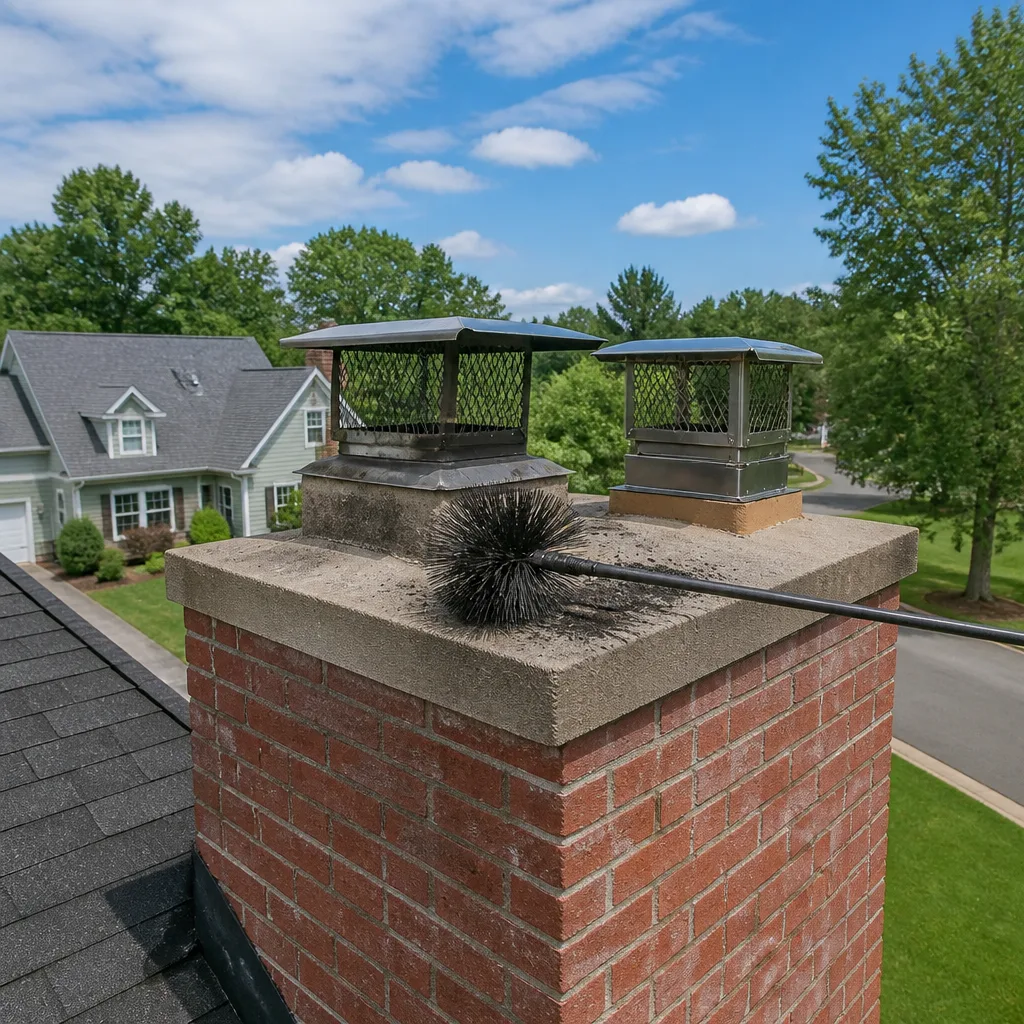
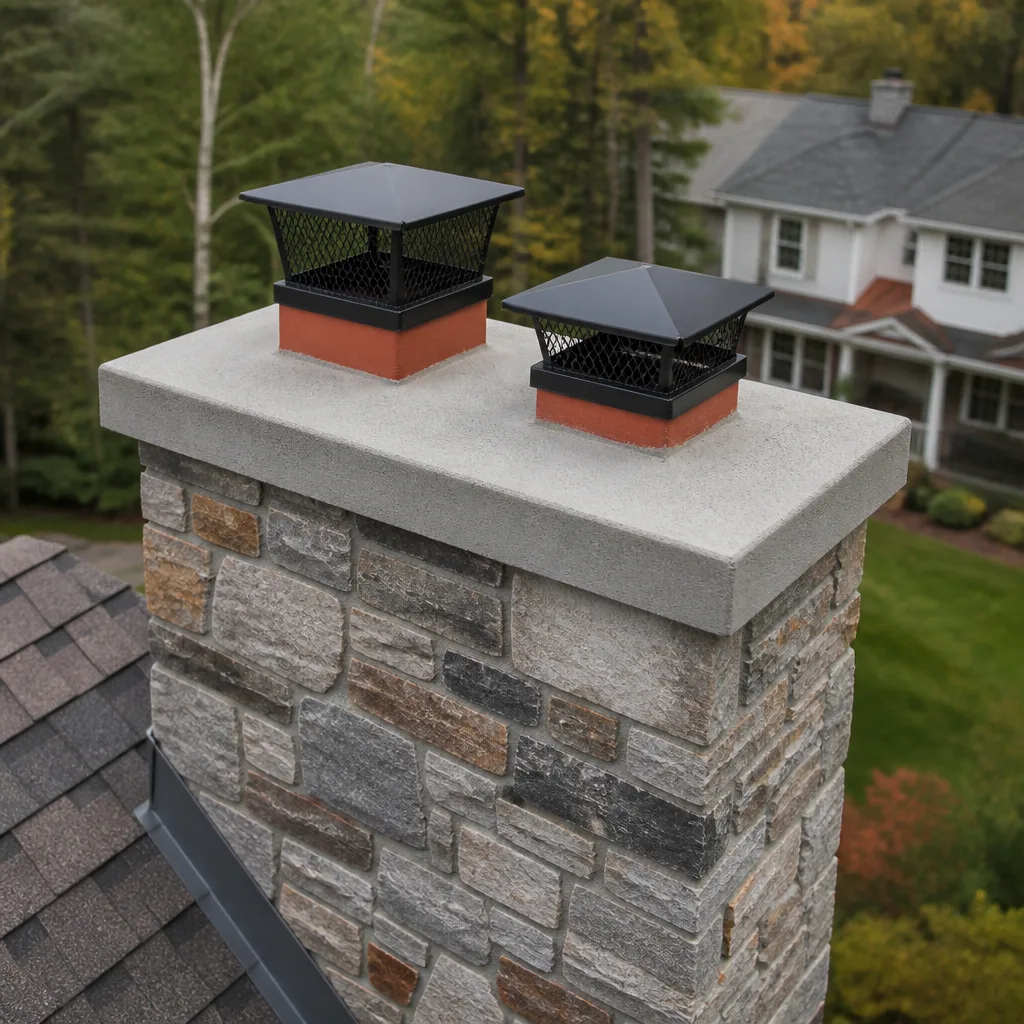
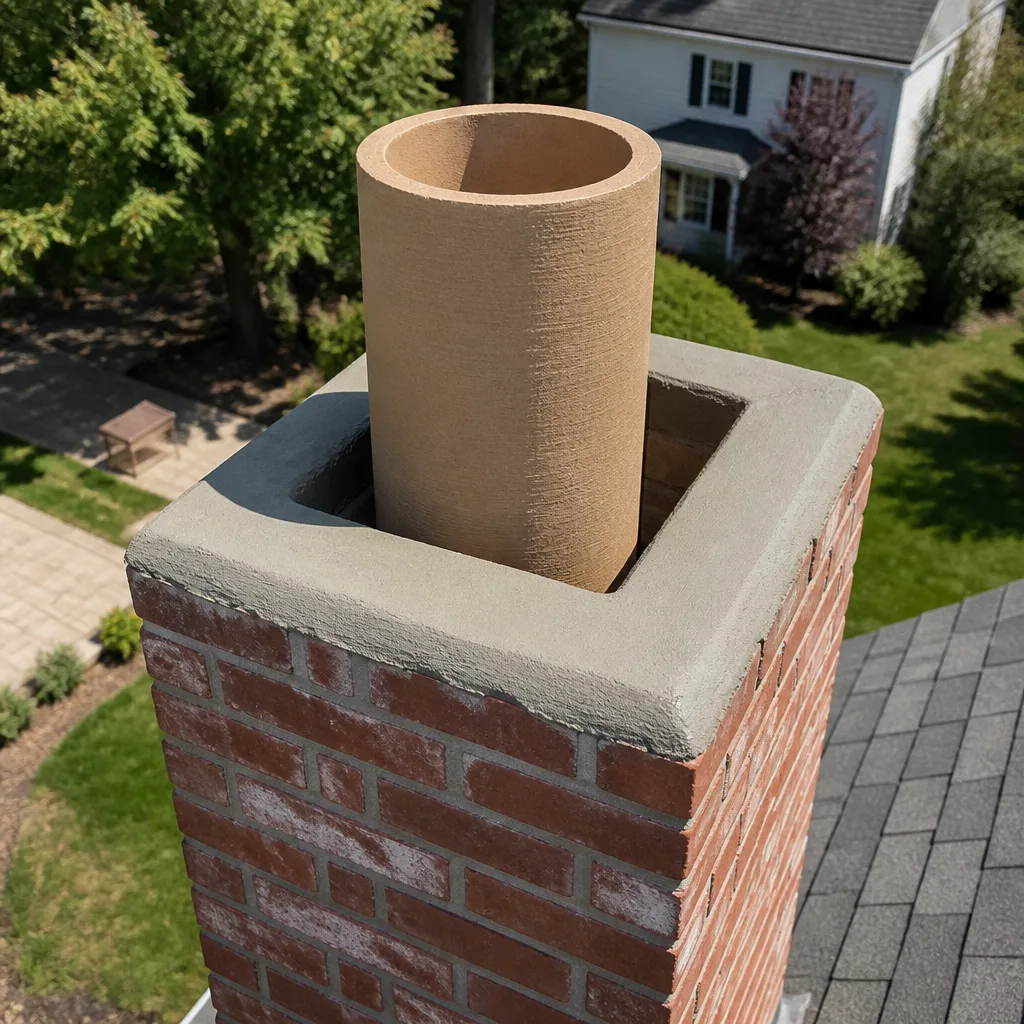
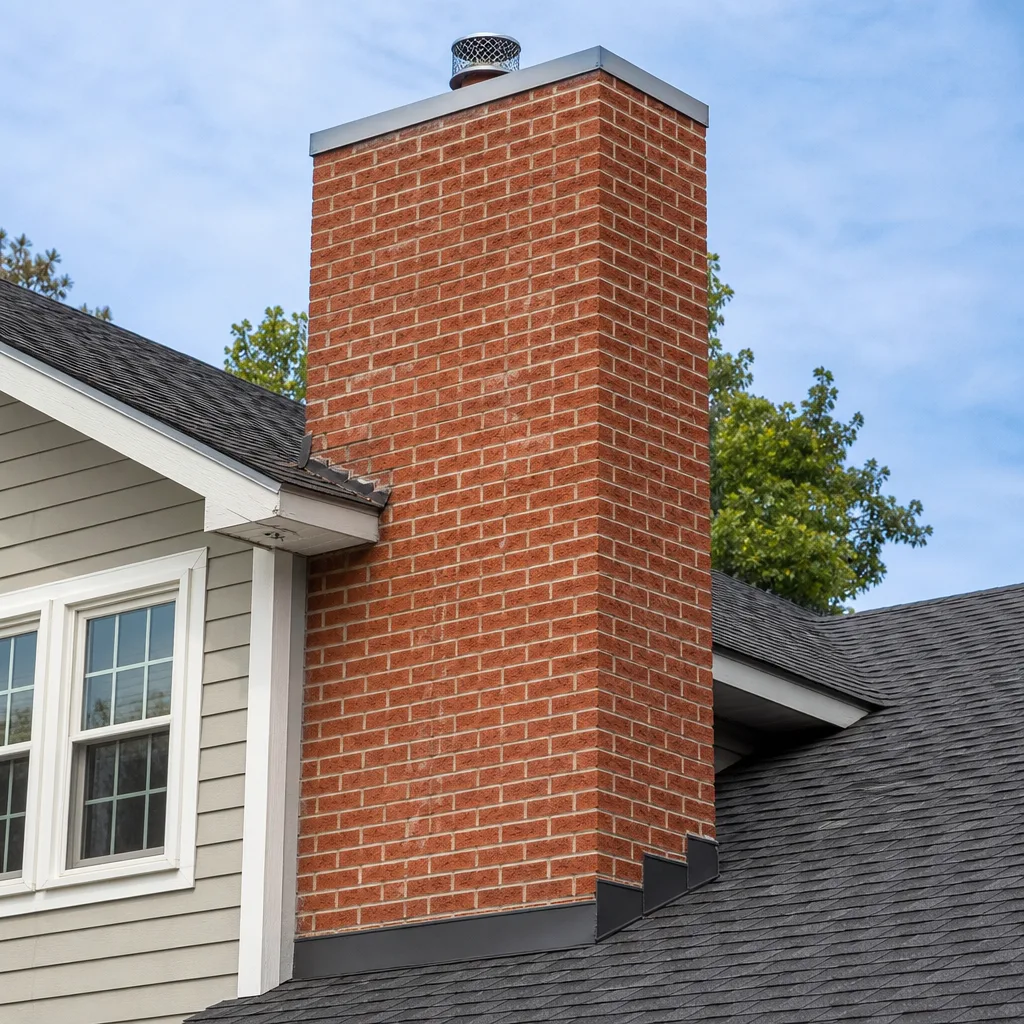
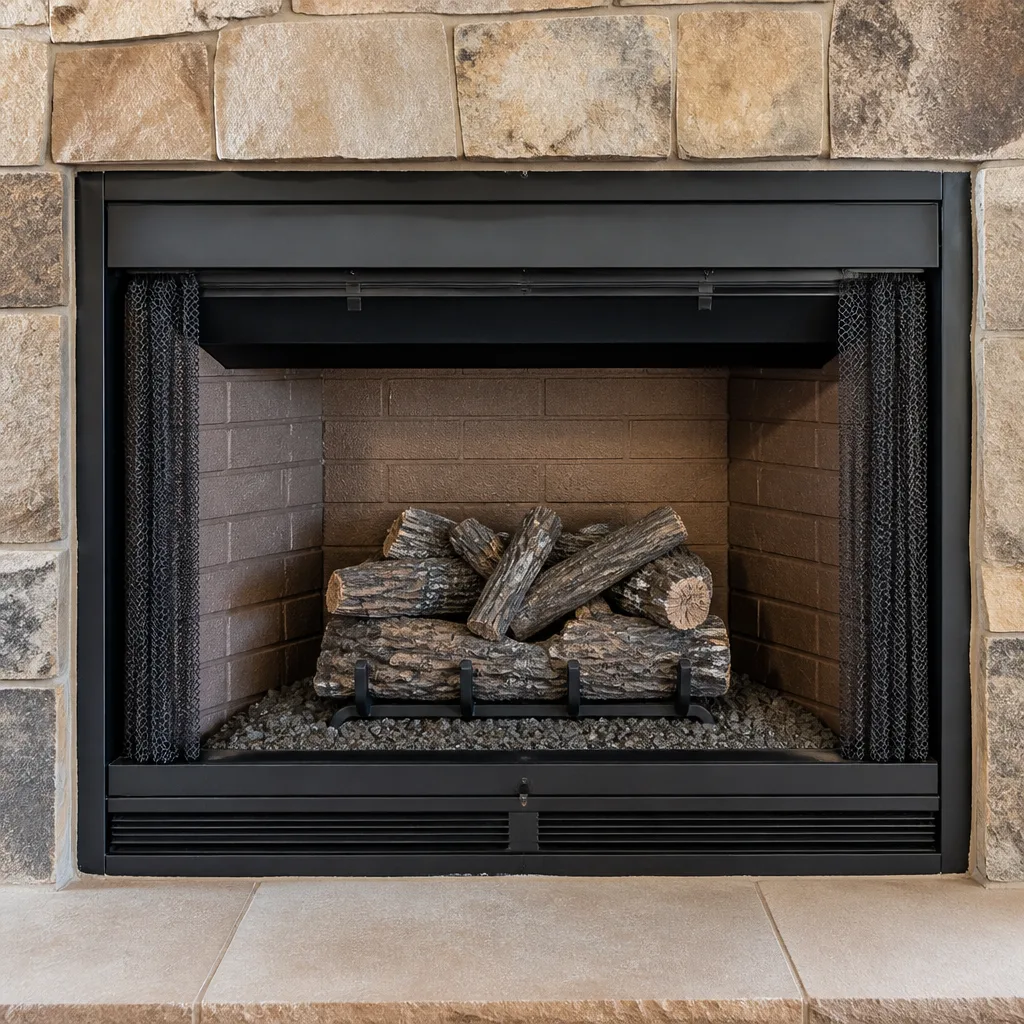
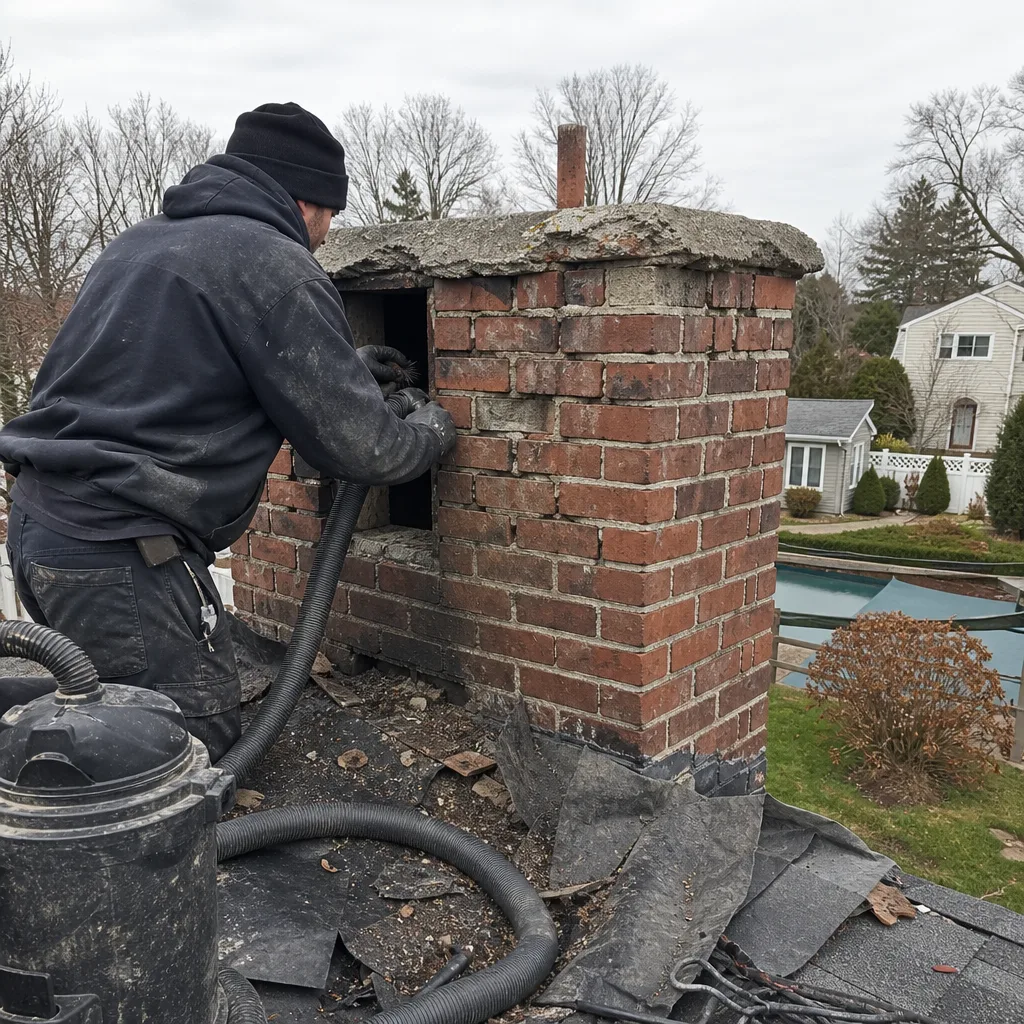 Before
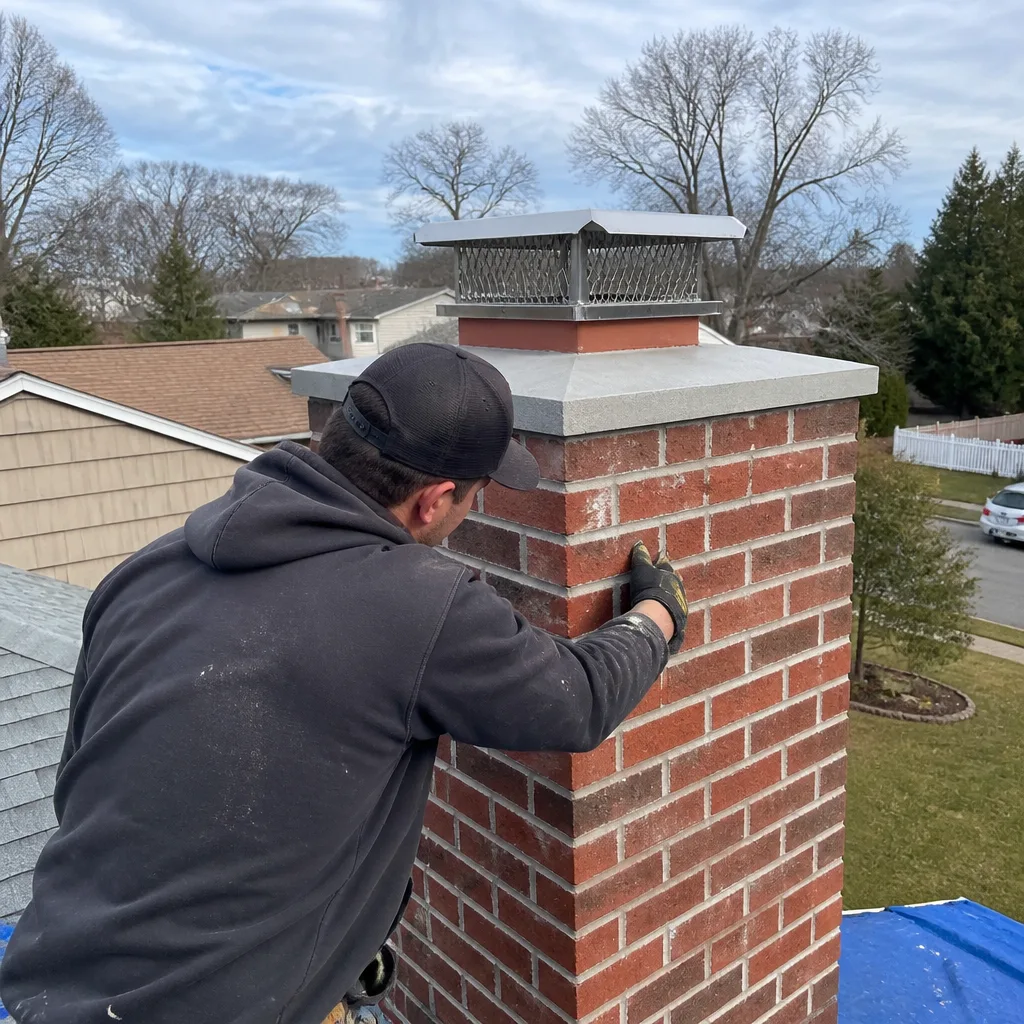 After
After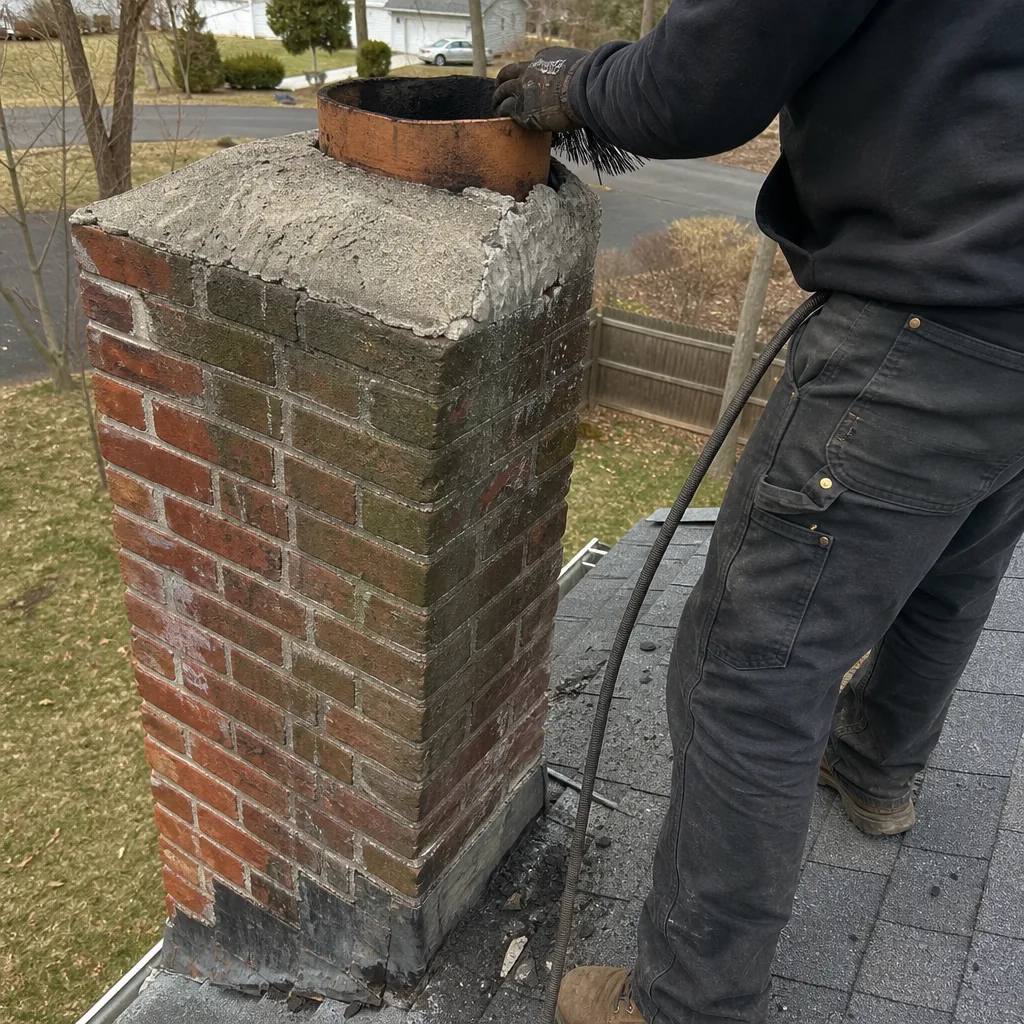 Before
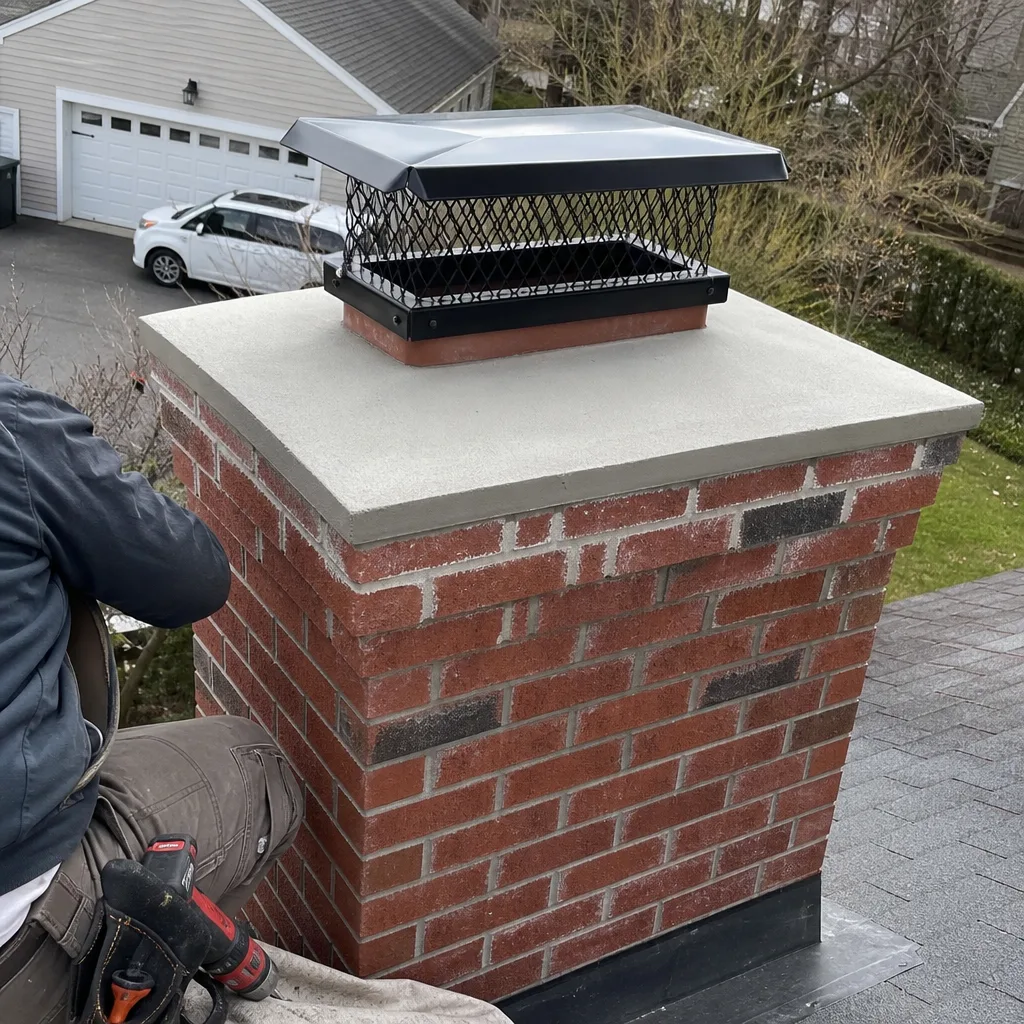 After
After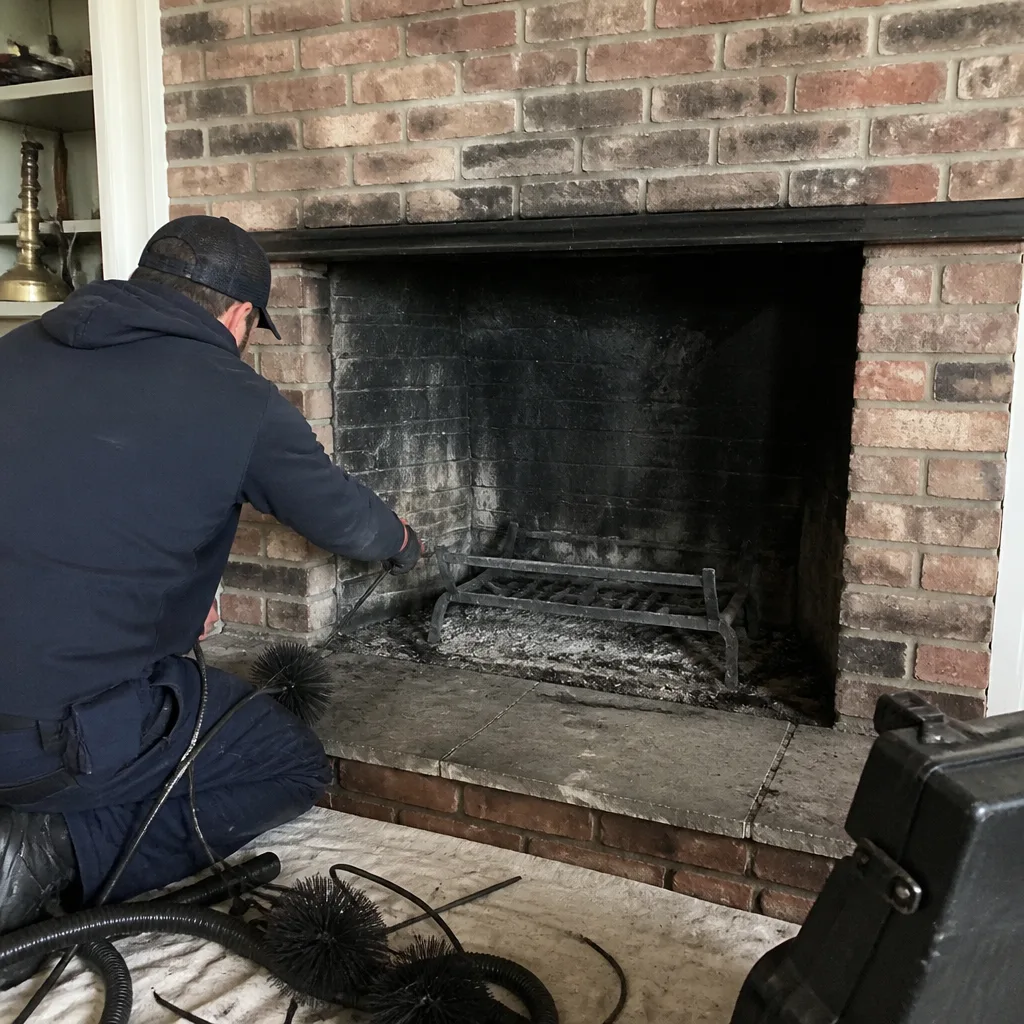 Before
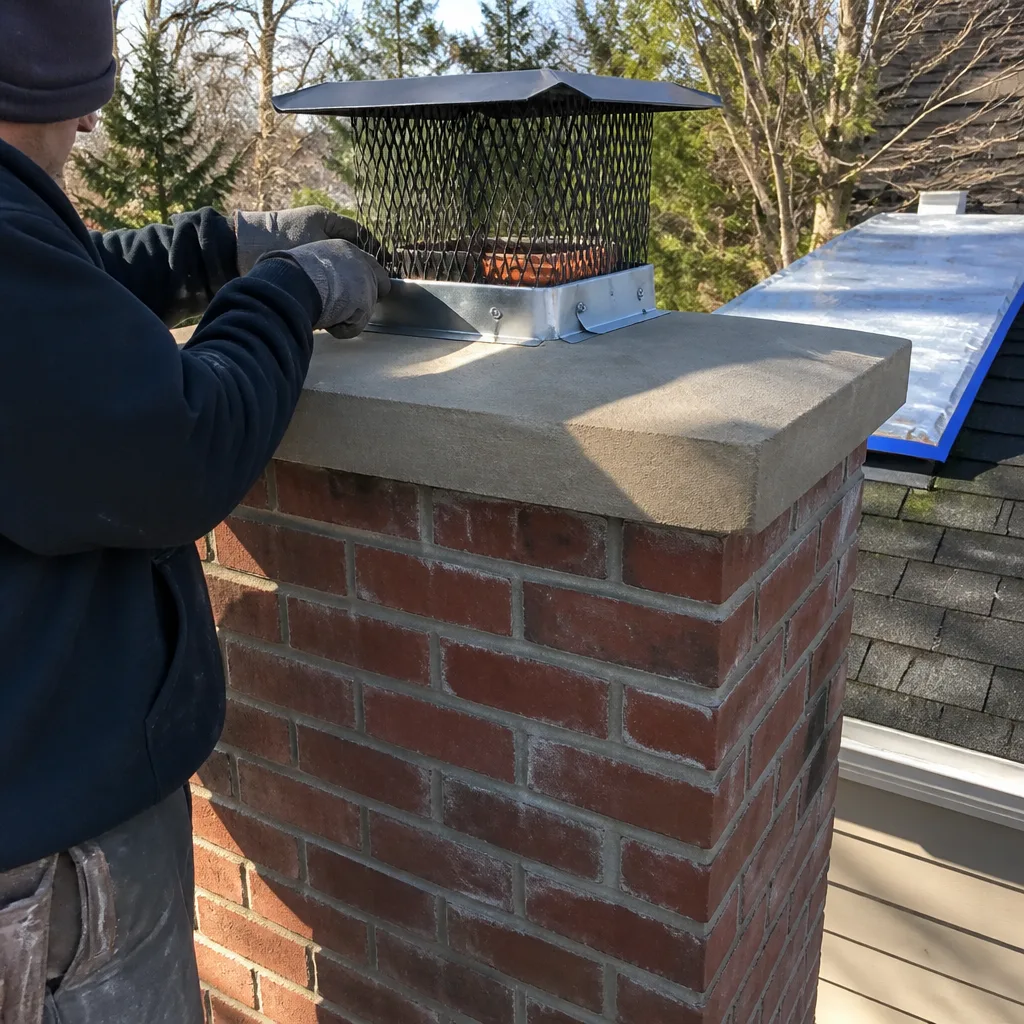 After
AfterChimney Cleaning Permits, Codes & Inspections in NY: What You Need to Know
A $300 chimney liner repair done without a permit can freeze a real estate sale in Northport and cost you ten times that to document retroactively - yet most homeowners are never told this when they sign a work order. In our 42 years serving Long Island, we’ve seen sellers blindsided at closing because a previous contractor cut corners on paperwork. This guide explains exactly which chimney work needs permits in New York, which doesn’t, and how to protect yourself before the work starts.
Quick Answer
Chimney cleaning and sweeping alone do not require a building permit anywhere in New York State. However, chimney liner replacement, fireplace modification, structural rebuilds, and most repair work do require permits under the New York State Uniform Fire Prevention and Building Code and local ordinances like the Town of Huntington building code. Homeowners should always ask contractors whether repair work will be permitted, and retain all documentation for insurance claims and future property sales.
Table of Contents
- Chimney Cleaning vs. Repair: Where the Permit Line Falls
- New York State Codes and NFPA 211 Standards
- Town of Huntington Building Code Requirements
- Chimney Liner Replacement: The Most Common Permit Trigger
- Fireplace Modifications and Structural Work
- What Documentation to Keep and Why It Matters
- Red Flags: When a Contractor Won’t Pull Permits
- Insurance Claims, Real Estate Sales, and Code Compliance
Chimney Cleaning vs. Repair: Where the Permit Line Falls
The distinction matters more than most homeowners realize. In New York, routine chimney maintenance - sweeping, cleaning, and basic inspection - falls under homeowner maintenance and requires no permit from the town, county, or state. You’re maintaining an existing system in its current configuration.
The moment you alter, replace, or repair components that affect the structure, fire safety, or venting capacity of the system, you cross into permit territory. Here’s how the line breaks down in practice:
No permit required:
- Annual chimney sweeping and creosote removal
- Level 1 or Level 2 camera inspection
- Cleaning of firebox, smoke chamber, and flue
- Minor mortar patching that does not alter structural integrity
- Chimney cap installation (non-structural, in most jurisdictions)
Permit required:
- Chimney liner replacement or relining
- Fireplace insert installation or modification
- Structural rebuild of chimney crown, shoulders, or exterior masonry
- Damper replacement that alters throat configuration
- Conversion from wood-burning to gas (or vice versa)
- Any work affecting clearances to combustibles
In Northport, we’ve inspected chimneys where a homeowner paid for “cleaning and repair” as a single line item, never knowing the contractor replaced a deteriorated clay flue liner without pulling the required Town of Huntington permit. The work was done competently. The materials were sound. But when that homeowner listed the house on Eaton’s Neck five years later, the missing permit became a $3,200 problem involving a retroactive application, engineer’s letter, and delayed closing.
The lesson: permits are not about whether the work was done well. They’re about whether the work was done visibly, inspectably, and on record.
New York State Codes and NFPA 211 Standards
New York State adopted the International Building Code and International Residential Code as the foundation of its Uniform Fire Prevention and Building Code. These codes incorporate by reference the National Fire Protection Association Standard 211, which governs chimneys, fireplaces, vents, and solid fuel-burning appliances.
Here’s what this layered system means for homeowners:
The state code sets minimums. New York’s Uniform Code establishes baseline requirements for construction, alteration, and repair of chimney systems. Local jurisdictions like the Town of Huntington can adopt more stringent requirements but cannot fall below the state minimum.
NFPA 211 provides the technical standard. When a chimney professional says work is “code compliant,” they typically mean it meets NFPA 211 standards for clearances, materials, and installation methods. This standard covers:
- Proper sizing of flue liners relative to appliance output
- Minimum chimney heights and termination clearances
- Acceptable materials for liner construction (stainless steel, aluminum, clay tile, or approved cast-in-place systems)
- Clearance requirements to combustible framing
- Inspection protocols and frequency
Local amendments add specificity. The Town of Huntington building department enforces the state code with local amendments, particularly around flood zone construction, wind resistance, and historical district requirements that affect exterior chimney appearance in areas like Northport Village.
We’ve found that “code compliant” gets used loosely in this industry. A contractor might mean NFPA 211 compliant. They might mean they followed manufacturer instructions for a Hearthstone Chimney Co. home product installation. They might mean nothing at all. When we document our Level-2 camera inspections, we specify which standard applies to each finding - NFPA 211 section reference, manufacturer specification, or local code requirement. Photos you can see, a plain-English verdict. That’s the only way the term has meaning.
Town of Huntington Building Code Requirements
The Town of Huntington, which encompasses Northport, East Northport, Centerport, and surrounding hamlets, enforces chimney-related permits through its Building Division. Understanding their specific process helps homeowners avoid delays and compliance gaps.
Permit application requirements:
- Completed building permit application with property owner signature
- Detailed scope of work description (not “chimney repair” - specific tasks)
- Contractor license and insurance documentation on file
- Site plan showing chimney location relative to property lines
- Manufacturer specifications for liner or appliance being installed
- Engineer’s letter for structural modifications or historical properties
Inspection sequence:
- Rough inspection after liner installation but before closure
- Final inspection after completion and cleanup
- Supplemental inspection if corrections are required
Northport presents specific considerations within this framework. Properties in the harbor-front flood zones require additional elevation verification. Homes in the Northport Historic District need Architectural Review Board approval for exterior masonry changes that alter visible character. We’ve worked on James Street properties where the liner replacement was straightforward but the exterior repointing required color-matched mortar approval that added two weeks to the timeline.
The Town of Huntington charges permit fees based on project valuation, typically $150-$400 for liner replacements and $300-$800 for structural rebuilds. These fees are separate from contractor labor and materials. A contractor who quotes “all-inclusive” pricing should specify whether permit fees are included or additional.
We pull permits for all work that requires them. Our technicians arrive with permit documentation displayed, and we schedule inspections around homeowner availability. Most jobs completed in a single visit - but permitted work sometimes requires a return visit for final inspection, and we build that into our scheduling without surprise charges.
Chimney Liner Replacement: The Most Common Permit Trigger
Chimney liner replacement is where most Northport homeowners encounter permit requirements without expecting them. The scenario plays out predictably: an annual cleaning reveals cracked clay tiles, spalling mortar joints, or improper sizing for a newer heating appliance. The sweep recommends relining. The homeowner assumes this is maintenance. It is not.
Why liners trigger permits:
A liner replacement alters the venting system of your home. The new liner must be sized correctly for the appliance it serves - too large and condensation accelerates deterioration; too small and draft pressure forces combustion gases into living spaces. The installation affects fire clearances, structural loading, and often requires modification to the chimney crown or top plate. These are not cosmetic changes.
Materials and code compliance:
New York code and NFPA 211 recognize several liner types, each with specific applications:
- Stainless steel: Required for wood-burning and solid-fuel applications. We use DuraFlex and Olympia Chimney stainless systems with lifetime warranties for these installations.
- Aluminum: Permitted only for certain gas appliance venting, with temperature limitations clearly specified.
- Cast-in-place: Approved systems like HeatShield that form a new flue within the existing structure, useful when preserving historic chimney dimensions matters.
- Clay tile: Permitted for new construction; generally not used for retrofits due to installation difficulty.
In Northport’s older housing stock - particularly the Cape Cods and Colonials built in the 1940s-1960s - we’ve found clay tile liners sized for coal or early oil furnaces, completely incompatible with modern high-efficiency equipment. The retrofit requires stainless steel liner downsizing, which always needs a permit and inspection.
What happens without a permit:
We’ve been called to properties where unpermitted liner work was discovered during pre-sale inspection. The remedies are never simple. The Town of Huntington may require:
- Exposure of the installed liner for visual inspection
- Engineer’s certification of proper sizing and installation
- Combustion analysis and draft testing documentation
- Retroactive permit application with double fees
The cost of remediation routinely exceeds the original installation price. The delay in closing costs more still.
Fireplace Modifications and Structural Work
Fireplace modifications represent the broadest category of permitted chimney work, encompassing everything from insert installation to complete rebuilds. Northport homeowners undertake these projects for efficiency, aesthetics, or safety recovery after chimney fires.
Common modifications requiring permits:
- Wood-burning insert installation into existing masonry fireplace
- Gas log set conversion with new gas line routing
- Fireplace opening dimension changes (enlargement or reduction)
- Smoke chamber parging to reduce corbelled dimensions
- Exterior chimney rebuild above roofline
- Crown replacement with structural extension or alteration
The Northport context:
Our coastal climate accelerates exterior masonry deterioration. Freeze-thaw cycles, salt air, and driving rains from the harbor punish chimney crowns and shoulders. We’ve rebuilt crowns on Bayview Avenue properties where the original construction lasted forty years but the replacement, done with modern materials and proper overhangs, should last longer still. We use Copperfield and Famco components for crown and cap assemblies, specified for marine exposure.
Structural rebuilds require the most extensive permitting. The Town of Huntington requires engineered drawings for chimney rebuilds exceeding 50% of above-roof height, and all work in flood zones must account for base flood elevation. We’ve coordinated with structural engineers on Centerport Road properties where the chimney served as structural support for a center-hall Colonial - the rebuild required temporary support and sequential reconstruction that added complexity but preserved the home’s integrity.
What “matching existing” means in practice:
Homeowners often request that rebuilt chimneys match original appearance. This is achievable but requires specification. We document original mortar joint profiles, brick dimensions, and coursing patterns before demolition. For Northport Village properties under historic review, we submit material samples to the Architectural Review Board before work begins. The permit process includes this approval step, and skipping it risks stop-work orders.
What Documentation to Keep and Why It Matters
Documentation is where competent work becomes provable work. We provide every Northport customer with a complete packet, and we recommend homeowners retain these records permanently - not until the next cleaning, but for the life of the property.
Essential documents to retain:
- Building permit and approval: The official Town of Huntington permit application, approval stamp, and inspection sign-offs. This is your proof that work was performed under municipal oversight.
- Contractor invoice with scope detail: Not “chimney work - $2,400” but itemized labor, materials, and specifications. Our invoices specify liner gauge, alloy type, manufacturer, and warranty terms.
- Inspection photographs: Before, during, and after images. Our Level-2 camera inspections produce dated, geotagged photographs stored in customer files and provided on request.
- Manufacturer warranties: Product-specific warranty cards and registration confirmations. DuraFlex and HeatShield warranties require owner registration for full coverage.
- Combustion analysis reports: For appliance-connected systems, draft and CO readings that verify safe operation post-installation.
- Certificate of completion or occupancy: Required for significant modifications; confirms final inspection approval.
When this documentation proves its value:
Insurance claims after chimney fires routinely request proof that liner and appliance installations were permitted and inspected. Without documentation, insurers may deny claims based on unpermitted work. We’ve assisted Northport homeowners with claims where our documentation packets - permits, photos, test results - accelerated approval by weeks.
Real estate transactions are the more common trigger. Suffolk County property transfers require seller disclosure of known defects and unpermitted work. A buyer’s inspection that reveals unpermitted chimney modification becomes a negotiation point, often requiring escrow holdbacks or seller-funded remediation. The $200 permit you skipped becomes a $5,000 closing concession.
We maintain records for all our Northport work dating back decades. If you purchased a home with uncertain chimney history, we can often inspect and document current condition even when prior paperwork is missing. But starting clean, with proper permits and retained records, is the only reliable protection.
Red Flags: When a Contractor Won’t Pull Permits
A contractor who resists permitting should trigger immediate scrutiny. The reasons given are rarely the real reasons, and the consequences fall entirely on the homeowner.
Common excuses and what they conceal:
- “Permits just drive up the cost.” They add modest cost - typically 5-10% of project value in our experience. What they really add is accountability. A contractor avoiding accountability has something to hide: unlicensed status, expired insurance, subcontracting to unqualified workers, or planned shortcuts in materials or methods.
- “I’ve been doing this twenty years, I know the inspector.” Personal relationships with inspectors do not exempt work from code compliance. This statement often precedes work that wouldn’t pass inspection - undersized liners, improper clearances, or unlisted appliances.
- “The homeowner can pull the permit to save money.” In New York, homeowners can pull permits for their own property. But the permit holder assumes legal responsibility for code compliance. If the contractor makes errors, the homeowner owns them. We pull our own permits because we stand behind our work - in writing, no arguing.
- “This is just maintenance, not really repair.” Semantic games with serious consequences. We’ve seen “maintenance” that included complete liner replacement, characterized this way to avoid permitting. The Town of Huntington disagreed, and the homeowner paid for the resolution.
- “Permits slow everything down.” They add days, sometimes weeks, to scheduling. Proper planning accommodates this. Rushing work to avoid permit timelines suggests the contractor’s schedule matters more than your compliance.
How to verify contractor legitimacy:
Before signing any work order in Northport, confirm:
- License status with the Town of Huntington Building Division
- Insurance certificates naming you as additional insured for the project period
- Willingness to specify permit responsibility in the written contract
- References from permitted jobs completed in the past year
Our contracts specify permit responsibility explicitly. We handle applications, fees, scheduling, and inspection attendance. The 90-Day Done Right Promise covers not just workmanship but permit compliance - if inspection reveals required correction, we return without additional charge.
Insurance Claims, Real Estate Sales, and Code Compliance
The true cost of unpermitted chimney work rarely appears at installation. It surfaces years later, at moments of financial vulnerability: after a fire, during a claim dispute, or in the compressed timeline of a pending sale.
Insurance implications:
Homeowner insurance policies contain standard provisions requiring that structural and mechanical systems be maintained to code. Unpermitted modifications can void coverage for chimney-related losses. We’ve reviewed denied claims where the insurer’s position was straightforward: the liner that failed and caused the fire was installed without permit or inspection, constituting undisclosed material alteration of the risk.
Even when coverage isn’t voided, unpermitted work complicates claims adjustment. Adjusters must determine whether damage resulted from covered peril (storm, fire) or pre-existing defect (improper installation). Permitted, inspected work with documentation resolves this ambiguity in the homeowner’s favor.
Real estate transaction impacts:
Suffolk County’s hot market doesn’t eliminate due diligence. Buyers’ inspectors increasingly verify permit history for major systems. Title companies flag open permits as cloud on title. Mortgage underwriters may require permit clearance before funding.
In Northport’s competitive market, sellers can’t afford closing delays. We’ve provided rush documentation and inspection services for sellers whose unpermitted chimney work surfaced in final weeks before closing. The stress is avoidable. The cost of avoidance is not.
Proactive protection:
If you own a Northport home with uncertain chimney history, we recommend a Chimney Cleaning & Sweep in Northport combined with Level-2 camera inspection. We can assess current condition, identify evidence of prior unpermitted work, and recommend documentation or remediation strategies. Our $89 Seasonal Tune-Up includes this assessment for qualifying systems.
Common Mistakes to Avoid
- Treating all chimney work as maintenance. Cleaning is maintenance. Liner replacement is construction. The permit requirement differs, and assuming otherwise exposes you to compliance failures that surface at the worst possible moment.
- Accepting verbal assurance that permits “aren’t needed for this.” Get the determination in writing from the Town of Huntington Building Division, or insist your contractor obtain it. Verbal claims evaporate when problems arise.
- Throwing away documentation after “the work is done.” Retain permits, inspections, warranties, and photos for the life of your property. Digital storage costs nothing; replacement documentation costs hundreds or thousands.
- Hiring based on lowest quote without verifying permit inclusion. A lower quote that excludes permit fees and inspection scheduling isn’t comparable to a complete quote. Ask explicitly: “Is permit application, fee, and inspection attendance included?”
- Assuming previous owner documentation transfers. Warranties often require owner registration and may not transfer. Permits attach to property but require traceability. Start your own file even if prior work seems documented.
- Ignoring local amendments to state code. Northport’s flood zones and historic districts impose requirements beyond base state code. A contractor familiar with Nassau County but not Suffolk County specifics may miss these.
- Waiting until sale preparation to discover permit gaps. Address uncertainty now, during routine maintenance, when you control timing and cost. Pre-sale rush permits cost more and close slower.
When to Call a Professional
Call a qualified chimney professional when your annual inspection reveals damage beyond surface cleaning scope, when you’re considering any appliance change or upgrade, or when you’re preparing to sell and need documentation review. See our more guides & resources for additional homeowner information. In Northport’s salt-air environment, we’ve found that chimneys showing exterior spalling or interior flue damage rarely improve with waiting - the freeze-thaw cycle accelerates deterioration through winter.
Hearthstone Chimney Co. offers free estimates in Northport - call (631) 528-2501. Our Level-2 camera inspections end with photos you can see and a plain-English verdict. If work is needed, we specify what requires permitting, handle all Town of Huntington applications, and provide complete documentation packets. The number on the estimate is the number on the invoice. Done right - and we stand behind it.
Frequently Asked Questions
No. Routine chimney sweeping, cleaning, and standard inspection do not require a building permit anywhere in New York State, including Northport and the Town of Huntington. These activities are classified as maintenance of an existing system. However, if cleaning reveals damage requiring liner replacement or structural repair, that subsequent work likely will require permitting.
Chimney liner replacement in Northport typically ranges from $2,800 to $5,500 for a standard single-flue residential installation, depending on liner material, flue length, appliance type, and access difficulty. Stainless steel systems for wood-burning applications fall at the higher end; gas venting aluminum systems at the lower. This range includes our materials from DuraFlex or Olympia Chimney, labor, and permit fees. Call (631) 528-2501 for an exact quote - estimates are free.
Cleaning removes creosote and debris but cannot repair cracked clay tiles, separated mortar joints, or improper sizing. If our Level-2 camera inspection shows structural flue damage or dangerous clearance conditions, liner replacement is necessary for safe operation - cleaning alone would leave the hazard intact. We show you the photos and explain exactly what we’re seeing before recommending any work.
For wood-burning systems, the National Fire Protection Association recommends annual inspection and cleaning as needed based on creosote accumulation. In Northport, where many homeowners burn weekends through winter, we typically see adequate cleaning need every 1-2 cords of seasoned hardwood burned. Oil and gas systems require less frequent sweeping but still need annual inspection for venting integrity and moisture damage from our coastal climate.
Skipped maintenance allows creosote accumulation that increases chimney fire risk, and conceals deteriorating liners that can allow carbon monoxide intrusion or structural damage. In Northport’s older housing stock, we’ve found blocked flues and deteriorated liners in homes where the chimney hadn’t been inspected in a decade. The cost of emergency response and remediation far exceeds routine maintenance. Call (631) 528-2501 to schedule before burning season.
Request the permit number and verify directly with the Town of Huntington Building Division at (631) 528-2501, or check online through their permit portal. Legitimate contractors provide this information readily. We include permit numbers on every invoice and encourage verification - it’s how we’ve built our reputation across four decades.
New York does not grandfather unpermitted structural or mechanical work. The Town of Huntington may require exposure, inspection, and retroactive permitting regardless of how long ago work was performed. We’ve assisted Northport homeowners with this process; it’s always more expensive and disruptive than proper original permitting. There is no statutory exemption for age of installation.
The Bottom Line
Chimney cleaning needs no permit in New York, but the repairs that cleaning often reveals absolutely do - and the gap between these categories is where homeowners get hurt. Understand what triggers Town of Huntington permitting. Ask contractors directly about their permit practices. Retain documentation permanently. And recognize that a few hundred dollars in permit fees today prevents thousands in remediation costs when you sell, claim insurance, or simply want confidence that your chimney is safe.
We’ve served Northport and Long Island communities for over 42 years because we treat permits and documentation as seriously as the work itself. No shortcuts. No surprises. The thing done correctly.
Written by Russell Haines, Owner at Hearthstone Chimney Co., serving Northport since 2014.