
Last updated September 10, 2026
Level 1 sweep and inspection to the NFPA 211 annual standard - flue, crown, cap, and flashing checked and photographed
Chimney sweep logs do not sweep chimneys. They loosen some creosote - which then falls where a brush and vacuum still have to collect it.
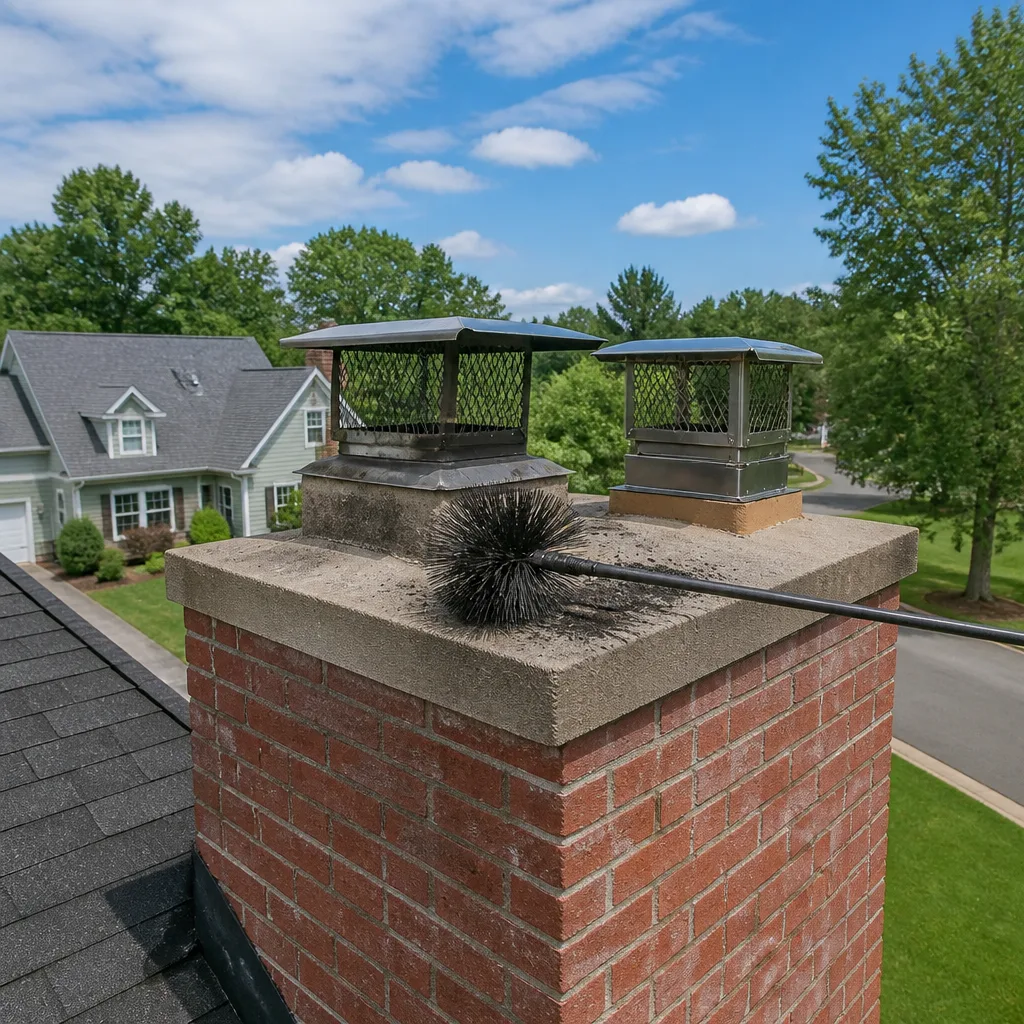
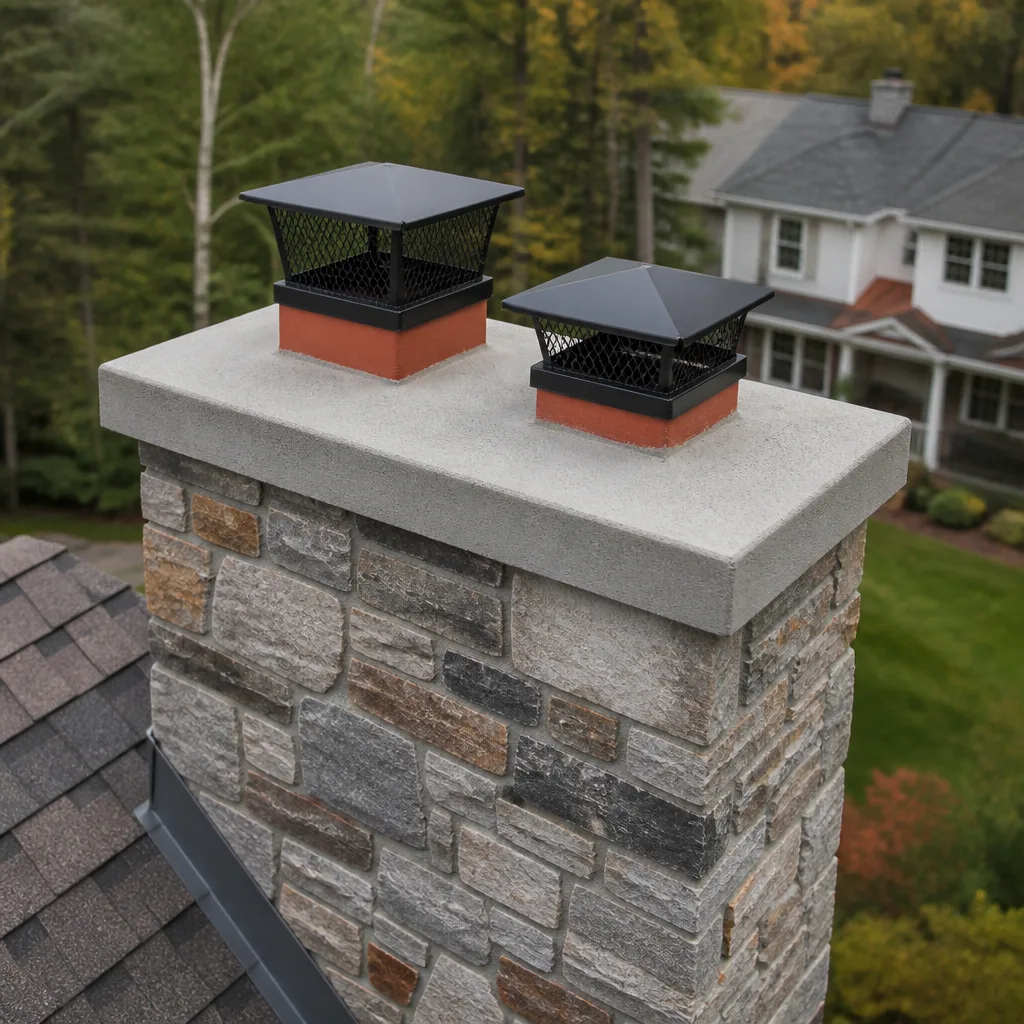
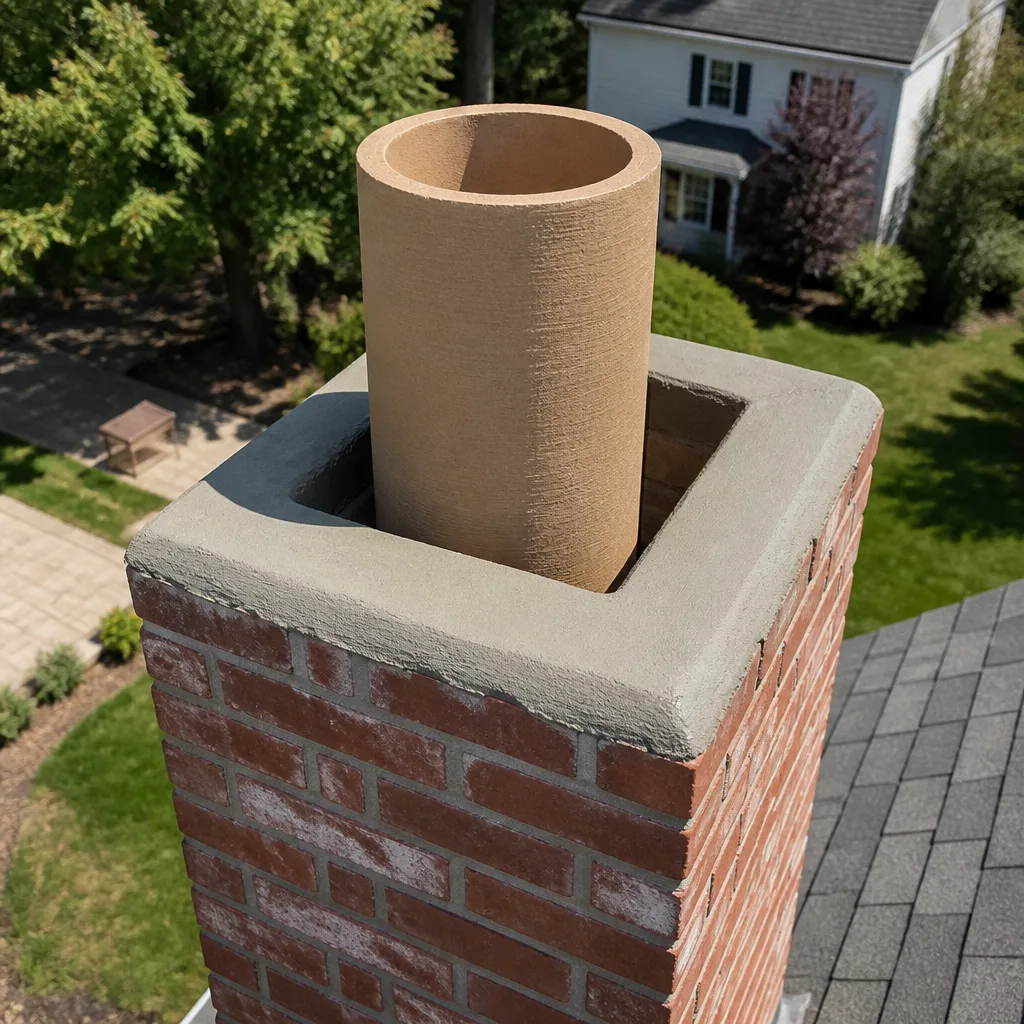
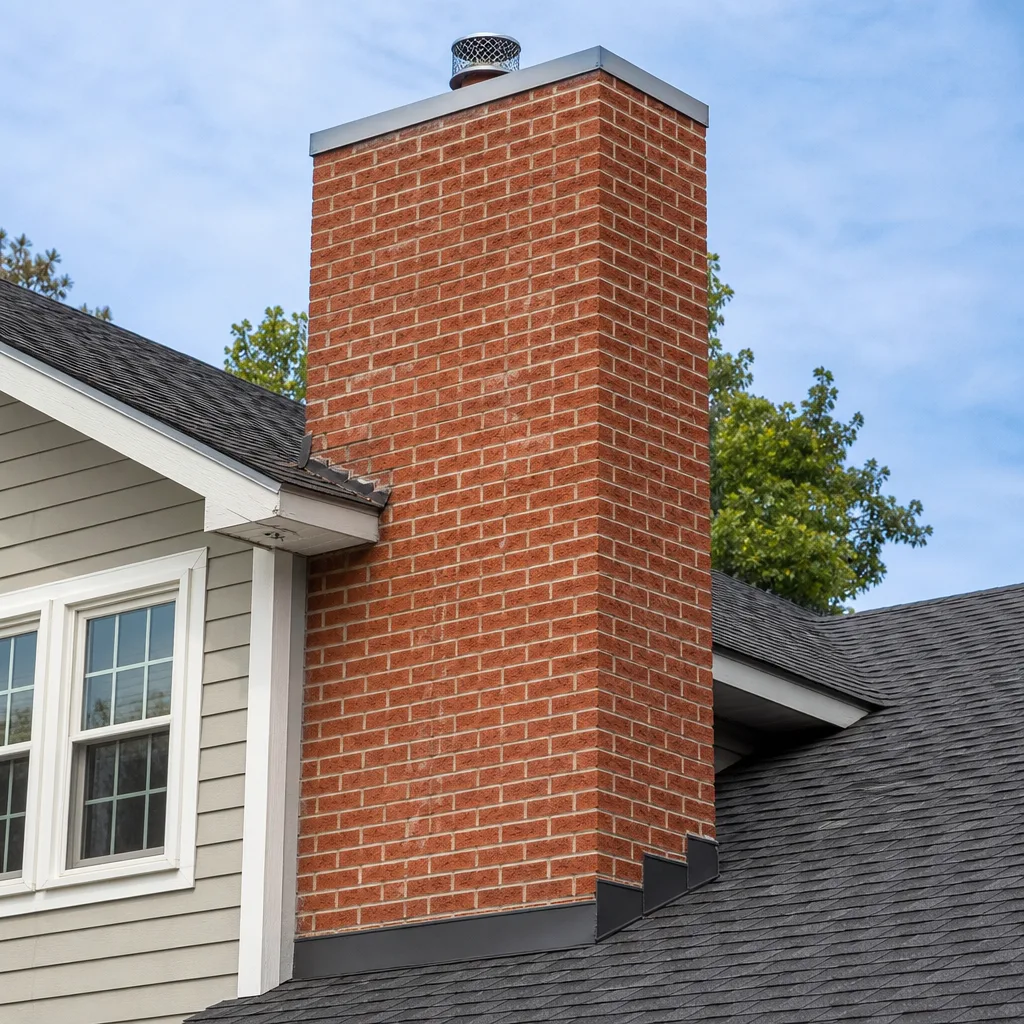
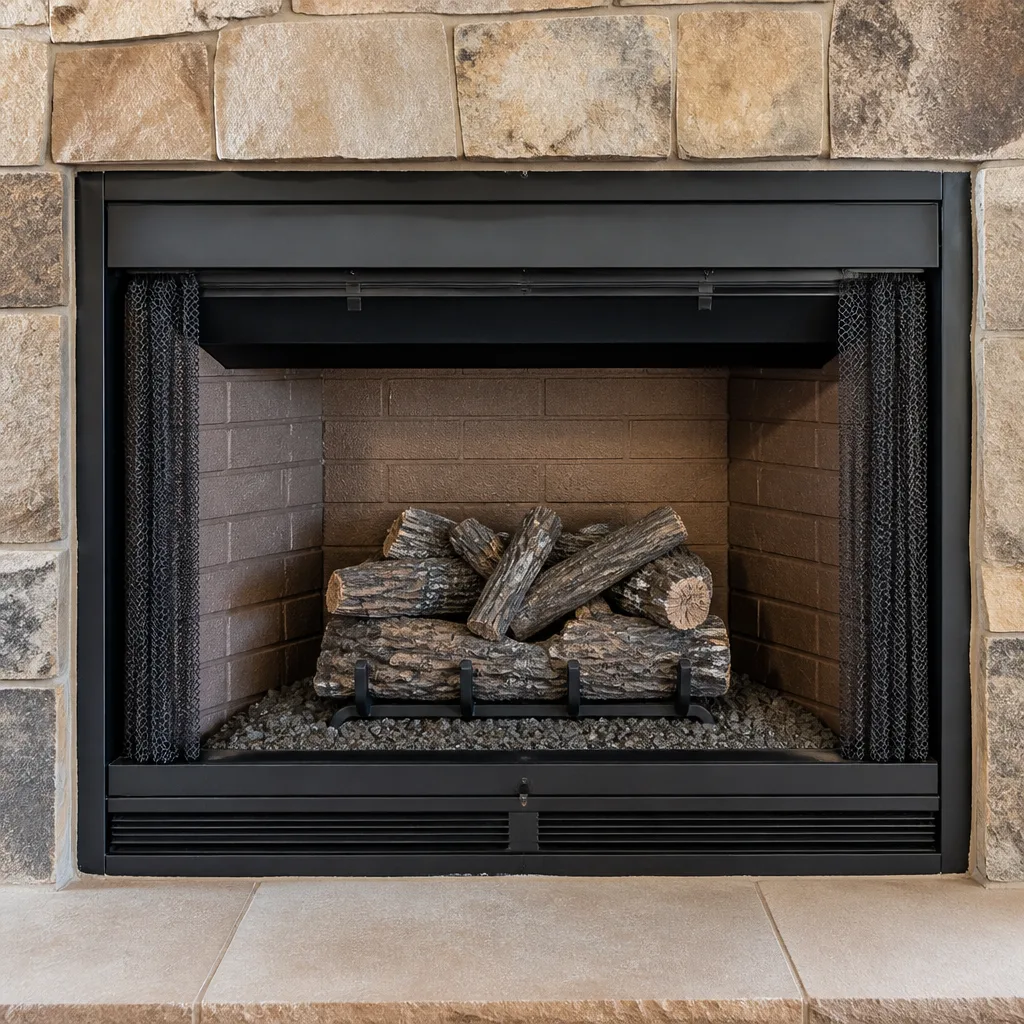
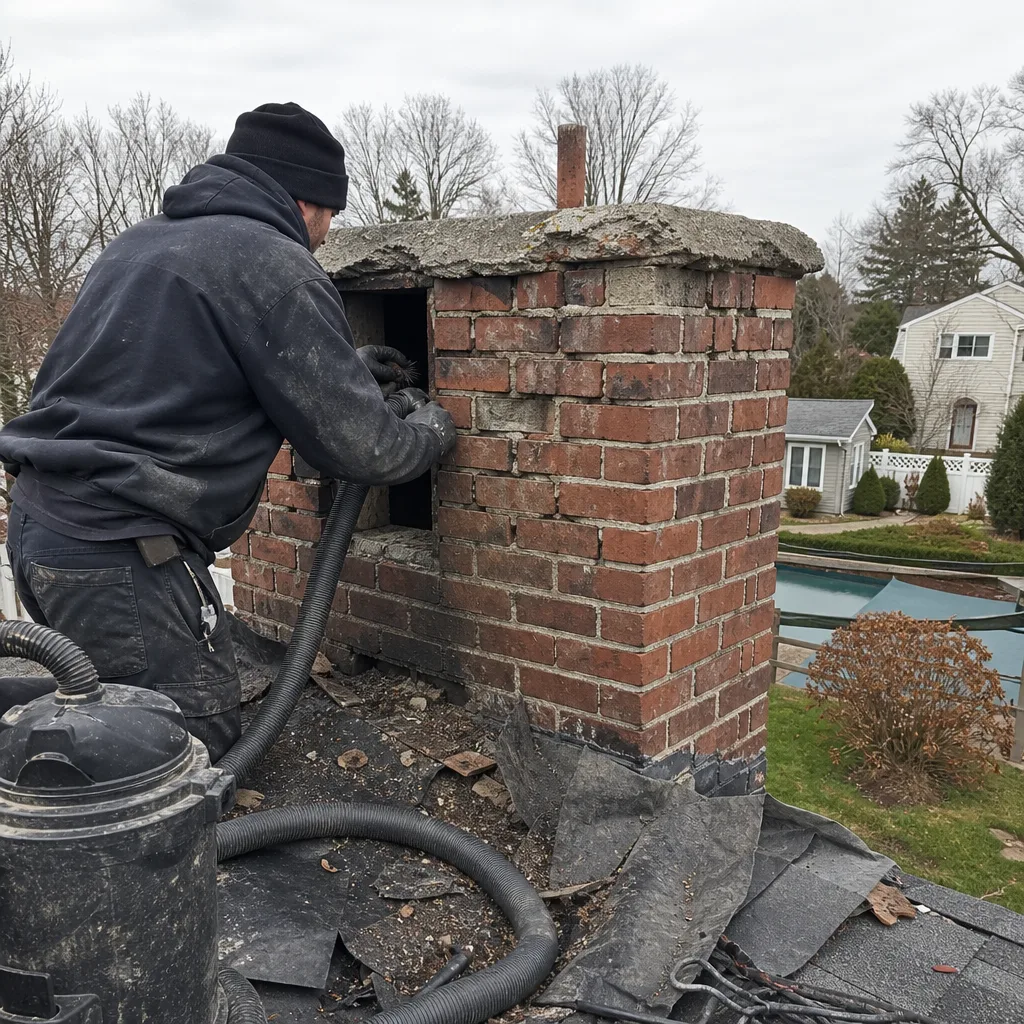 Before
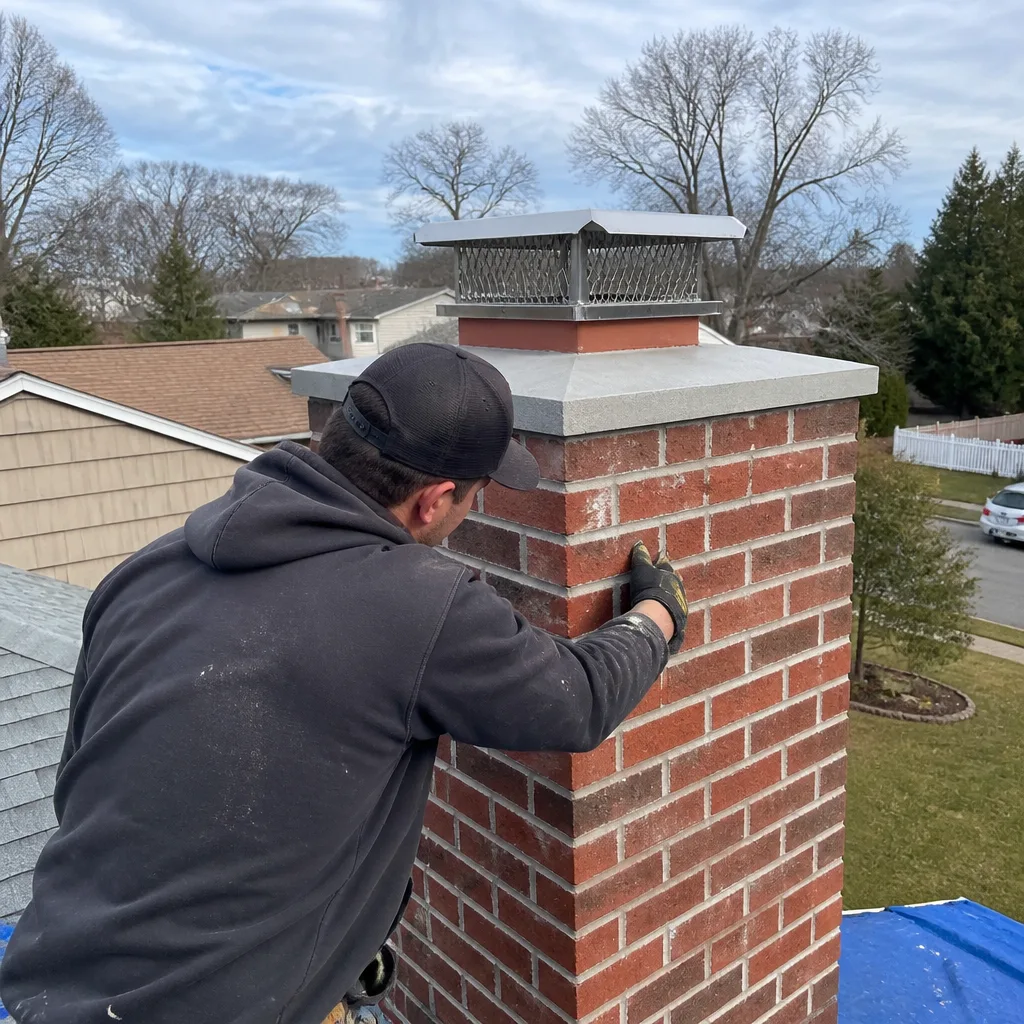 After
After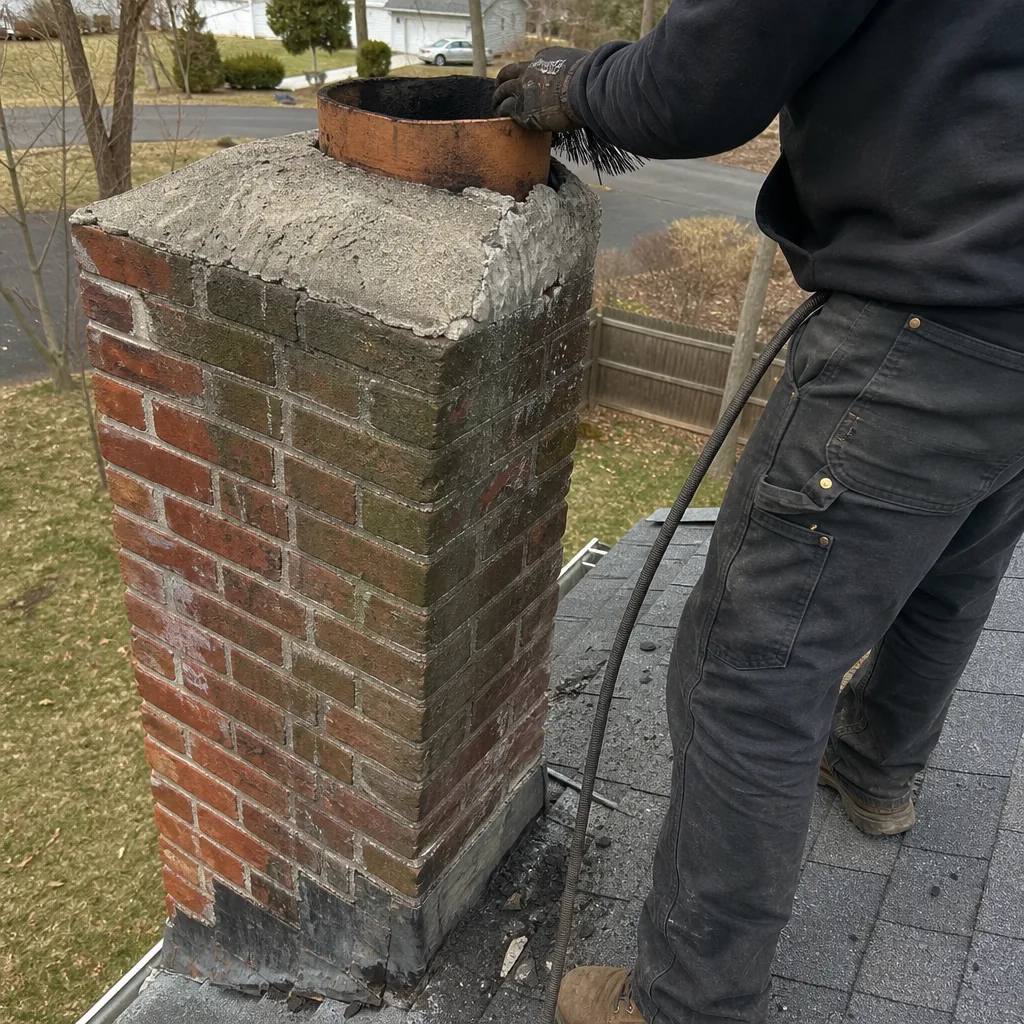 Before
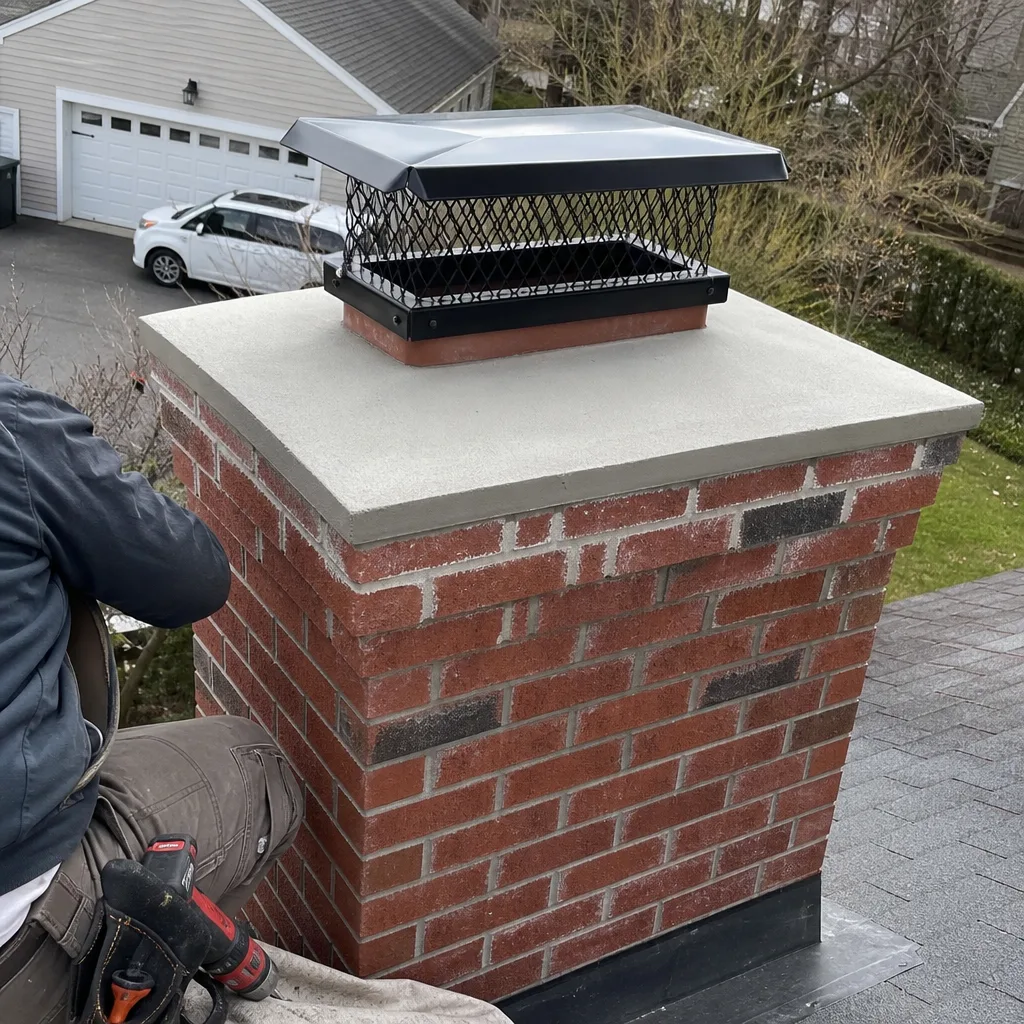 After
After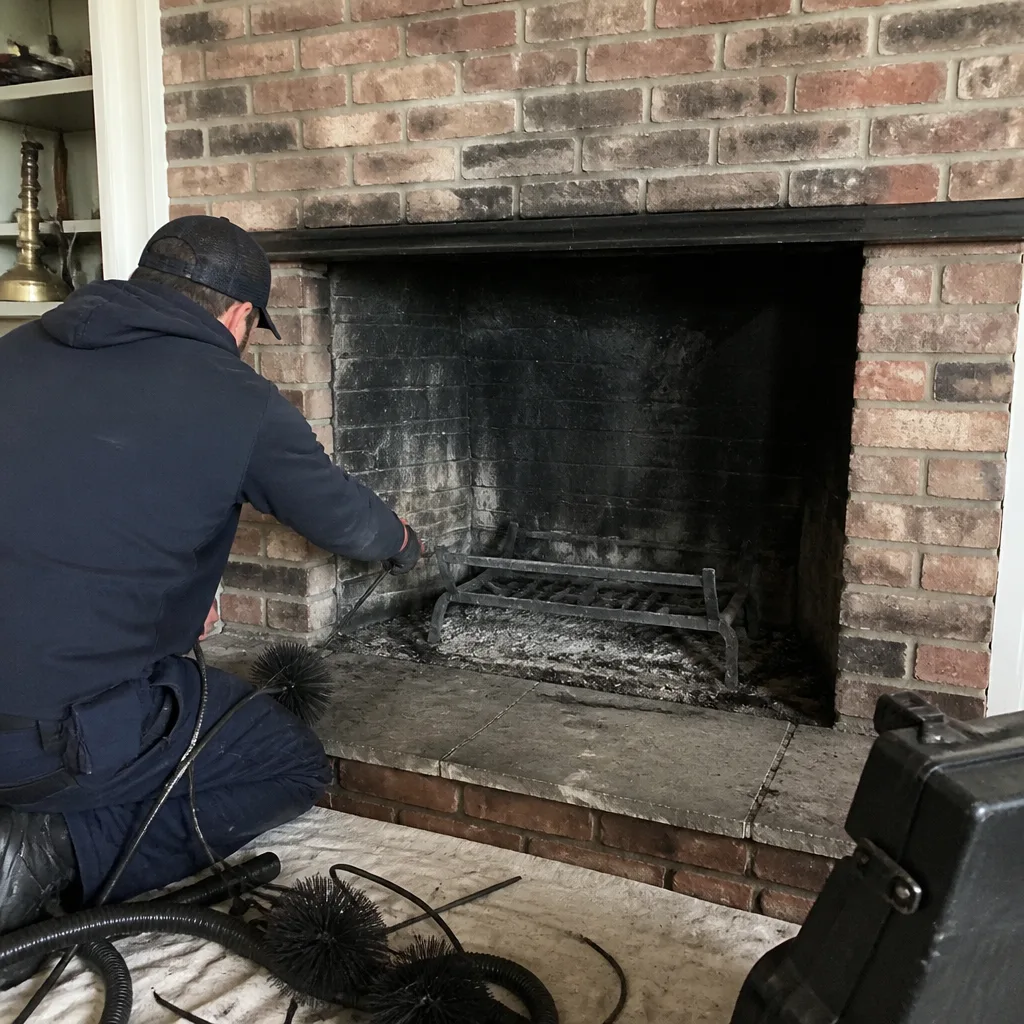 Before
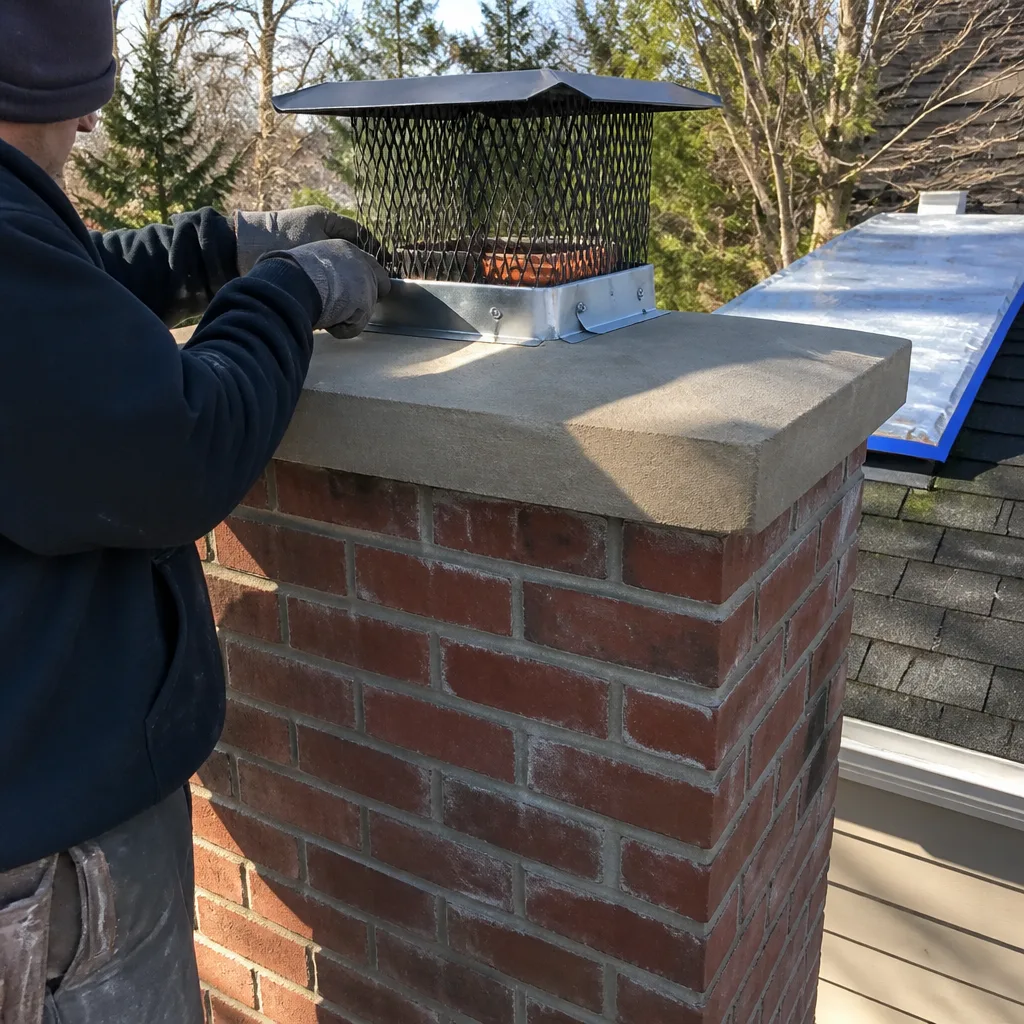 After
AfterChimney Cleaning Warning Signs: A Northport Homeowner’s Reference Guide
A white stain running down your chimney exterior isn’t cosmetic - it’s your masonry telling you water has been moving through it long enough to carry dissolved salts to the surface. That conversation started without you. In Northport, where Long Island Sound moisture meets freeze-thaw winters, chimneys age faster than homeowners expect. After 42 years of climbing roofs in this village, we’ve learned that most chimney failures announce themselves plainly - if you know what to listen for, smell, and look at. This guide names every warning sign we’ve documented, explains what each one actually means for your safety, and points you to more guides & resources for ongoing chimney care.
Quick Answer
The most critical chimney warning signs for Northport homeowners are: visible white efflorescence or spalling brick on the exterior (water intrusion), a sharp oily odor when the fireplace is not in use (Stage 3 creosote buildup), smoke rolling back into the room (draft failure or blockage), and any animal sounds or debris in the flue (immediate fire hazard). Most of these conditions develop gradually and can be caught during routine use - but the oily creosote smell and any smoke rollout mean stop using the fireplace and call a professional, as covered in our DIY vs Professional Chimney Cleaning: The Northport Homeowner’s Decision Guide.
Table of Contents
- Odor-Based Warnings: What Your Chimney Is Telling You by Smell
- Visual Exterior Warnings: Reading Your Chimney from the Curb
- Interior Warnings: Signs Inside the Firebox and Hearth
- Sound-Based Warnings: Animals, Drafts, and Structural Noises
- How to Describe What You Observed to Your Sweep
- Monitor, Schedule, or Stop Using: A Decision Framework
- Northport-Specific Factors: Climate, Age, and Local Conditions
- Common Mistakes to Avoid
- When to Call a Professional
- Frequently Asked Questions
- The Bottom Line
Odor-Based Warnings: What Your Chimney Is Telling You by Smell
Smell is the most underused diagnostic tool in chimney maintenance. Northport homeowners with decades-old fireplaces often tell us, “It always smells a little like smoke in winter,” as if that’s normal. It isn’t always. The key is knowing which smell means what.
Normal wood smoke residue has a dry, campfire-like quality. You’ll notice it briefly when you first open the damper after a season of disuse, or when humidity spikes in July and August. It dissipates within minutes of ventilation. This smell comes from benign soot and ash left on flue walls - a reminder that your chimney needs its annual sweep, but not an emergency.
Stage 3 creosote smells entirely different. It’s sharp, oily, and clings to the back of your throat. Some homeowners describe it as asphalt-like or reminiscent of roofing tar. This is glazed creosote, a hardened, highly combustible deposit that forms when wood burns at low temperatures or with insufficient airflow. In Northport, we see it most often in homes where homeowners burn unseasoned oak or run their fireplaces with the glass doors sealed tight, starving the fire of oxygen. Stage 3 creosote ignites at approximately 451 degrees Fahrenheit - roughly the same temperature as paper - and burns at over 2,000 degrees, hot enough to crack clay flue liners and ignite adjacent framing.
If you detect this oily smell, especially when the fireplace has not been used recently, stop using it. The creosote is off-gassing volatile compounds. This is not a cleaning situation you can schedule at leisure.
Musty or mildew odors indicate water intrusion, usually through a compromised crown, deteriorated flashing, or porous brick. In Northport’s coastal climate, where nor’easters drive rain sideways and spring humidity lingers, water finds its way in through gaps smaller than a pencil line. The smell worsens after heavy rain. Left unaddressed, this moisture destroys mortar from the inside out and can rust metal components you cannot see without a camera inspection.
Decomposition smells - sweet, sour, or unmistakably organic - mean an animal has died in the flue or a nesting site has become saturated with waste. Squirrels, raccoons, and starlings are common intruders in Northport’s mature tree canopy. The smell intensifies with heat and humidity. Beyond the obvious unpleasantness, decomposing organic matter attracts insects and can harbor pathogens.
Here’s how to track and report smells to your sweep:
- Note the exact location - firebox, hearth area, or second-floor rooms adjacent to the chimney chase.
- Record when the smell appears: during burning, after burning, during rain, or constant.
- Describe the quality in plain terms - “like a campfire,” “like tar,” “like wet basement,” or “like something died.”
- Check if the smell correlates with damper position, wind direction, or recent weather.
Accurate smell reporting saves diagnostic time and ensures your technician brings the right equipment.
Visual Exterior Warnings: Reading Your Chimney from the Curb
You don’t need a ladder to spot most chimney exterior problems. Stand across the street during daylight and look. Better yet, use binoculars after a storm.
Efflorescence appears as white, gray, or yellowish powder streaking down brick faces. It’s crystallized salt deposited by water moving through masonry, evaporating at the surface, and leaving minerals behind. Think of it as sweat from a fever - the symptom, not the disease. The disease is water penetration, and in Northport’s freeze-thaw climate, that water expands when it freezes, widening cracks with every cycle. We’ve replaced crowns in Eatons Neck and Asharoken where efflorescence was visible for three years before the homeowner called. By then, the crown was spalled through to the flue liner - a scenario detailed in The Complete Guide to Chimney Cleaning in Northport.
Efflorescence that reappears within months of cleaning signals active, ongoing water intrusion. A one-time bloom after a particularly wet season may be residual. The difference matters for prioritization.
Spalling is efflorescence’s aggressive cousin. The brick face flakes, pops, or crumbles entirely, exposing the softer interior. Spalled brick cannot be repaired - only replaced. We see accelerated spalling in Northport homes built before 1980 with softer, more porous brick common to that era. The combination of salt air, freeze-thaw cycling, and decades of heat stress takes its toll. Spalling near the roofline often indicates a failed crown; spalling at the base suggests groundwater wicking or splash-back from missing or clogged gutters.
Flashing gaps show as lifted, separated, or rusted metal where the chimney penetrates the roof plane. Step flashing should lie flat against both brick and shingles. Counter-flashing should be cut into mortar joints and sealed. Gaps here are invitation-only entry points for water. After Hurricane Ida’s remnants soaked Long Island in 2021, we documented flashing failures in Fort Salonga and Northport village that had been “fine” for twenty years until six inches of rain in four hours found the weak spots.
Crown cracks are visible from ground level as dark lines across the concrete cap. A proper crown overhangs the brick by at least two inches, has a beveled edge to shed water, and contains no organic material in the mix. Crowns poured directly level with the brick edge, or mixed with wood chips for volume, fail predictably. Hairline cracks can be sealed with professional-grade crown sealant. Cracks wider than a nickel, or cracks that have opened after previous sealing, require crown rebuilding. We rebuild with proper concrete mix and slope, sealed with materials from Copperfield’s professional line for longevity in coastal conditions.
Missing or damaged chimney caps are immediately visible. The cap is not decorative. It prevents rain entry, animal intrusion, and downdraft-induced debris accumulation. A Northport home without a cap is a home with a hole in its roof that happens to vent smoke.
Staining on siding or roofing near the chimney indicates either flashing failure or condensate runoff from an improperly sized or unlined flue. The stain pattern tells the story: vertical streaks on siding suggest flashing; broad, diffuse staining on shingles suggests acidic condensate eating at asphalt.
Interior Warnings: Signs Inside the Firebox and Hearth
The firebox is where you have the best view of your chimney’s condition - if you know what to look for between fires, when the interior is cool and the ash is cleared.
Smoke rollout is the most urgent interior sign. If smoke enters the room during normal firing, something is critically wrong. Possible causes include:
- Flue blockage from creosote buildup, animal nests, or collapsed liner sections
- Damper failure or obstruction - closed, stuck, or partially open
- Negative pressure in the house from exhaust fans, HVAC imbalance, or tightly sealed construction
- Improper flue sizing for the fireplace opening
- Wind-induced downdraft, particularly common in Northport’s exposed coastal locations
Any smoke rollout means extinguish the fire safely and do not use the fireplace until inspected. Carbon monoxide, the odorless companion to visible smoke, may be entering simultaneously.
Damper resistance or irregular operation suggests creosote accumulation on the damper blade, warping from heat stress, or mechanical failure of the linkage. A damper that requires force to open or close, that hangs at an angle, or that will not seal fully when closed, compromises both draft control and energy efficiency. In Northport’s heating season, a leaking damper is like leaving a window cracked - except the window opens into an uninsulated brick shaft.
Visible cracks in firebox brick or mortar allow heat to reach combustible framing. The firebox is built with firebrick and refractory mortar designed to withstand direct flame. Standard mortar joints between firebrick will deteriorate with thermal cycling; gaps wider than a pencil eraser, or cracks running through brick rather than mortar, require professional evaluation. We repair fireboxes with HeatShield refractory mortar, rated for the temperatures these surfaces endure.
The rusted firebox floor is the sign most homeowners mistake for normal aging. That orange-brown staining on the hearth or firebox base is not “just old.” It indicates water entering from above, running down the flue, and pooling where it meets the firebox floor. The water carries combustion acids that accelerate rust on any metal components and deteriorate mortar. By the time rust is visible, water has been entering for seasons. We’ve opened fireboxes in Northport homes where the damper frame had rusted nearly through, hidden from view until the camera inspection.
Hearth separation - a gap opening between the hearth and the firebox, or between hearth sections - indicates settlement, thermal expansion damage, or water-related subfloor deterioration. Even small gaps allow embers to reach combustible materials beneath.
Discoloration of walls or ceiling near the chimney chase inside the home mirrors exterior water intrusion but confirms it’s reaching interior spaces. Bubbling paint, stained plaster, or wallpaper lifting near the chimney breast are never normal and never “just humidity.”
Sound-Based Warnings: Animals, Drafts, and Structural Noises
Chimneys are excellent conductors of sound. What you hear, and when you hear it, provides precise diagnostic information.
Scratching, scurrying, or vocalizations from the flue mean an animal is present or nesting. In Northport, we encounter:
- Squirrels: Rapid, frantic scratching; most active dawn and dusk; often enter through uncapped flues or damaged screens
- Raccoons: Heavier, deliberate movement; vocal chittering; excellent climbers that can breach poorly secured caps
- Birds: Fluttering, peeping; chimney swifts are protected and cannot be disturbed during nesting season (May through August)
- Bats: High-pitched squeaking; typically quiet during day, active at dusk
If you hear animal activity, stop using the fireplace immediately. Nesting materials are highly combustible. An animal startled by heat or smoke may die in the flue, creating blockage and odor problems. More critically, a trapped animal may damage liner sections trying to escape, creating gaps that allow heat and combustion gases into wall cavities.
We remove animals humanely when possible, install proper caps with appropriate mesh sizing, and inspect for liner damage before the fireplace returns to service. Our fireplace services in Northport include wildlife exclusion as standard practice.
Wind whistling or howling from the fireplace when not in use indicates a missing or improperly fitted damper, a damaged chimney cap, or a flue that is significantly oversized for the appliance. The sound is more than annoying - it’s audible evidence of heated air escaping your home continuously.
Popping or cracking during firing can be normal thermal expansion of firebrick and metal components. But sharp, irregular cracks, especially accompanied by visible mortar displacement, suggest water trapped in masonry is flash-steaming under heat. This is the same mechanism that causes spalling on the exterior, occurring where you cannot see it.
Rumbling or roaring when the damper is open with no fire lit indicates a significant downdraft, often from wind patterns around the chimney top or pressure differentials in the house. In Northport’s exposed locations, particularly homes near the water or on elevated lots, downdrafts can be severe enough to blow soot and ash into the room. A properly designed cap with wind-resistant features, or in extreme cases a chimney fan, addresses this.
How to Describe What You Observed to Your Sweep
The quality of your chimney service depends partly on what you tell us before we arrive. A generic “needs cleaning” appointment may not include the camera inspection or specialized equipment your actual condition requires - our How to Hire a Chimney Cleaning Contractor in Northport: A Step-by-Step Guide explains what to ask for.
Here’s how to communicate effectively:
- Lead with the symptom, not the suspected cause. Say “I smell something like hot tar when I walk past the fireplace,” not “I think I need a cleaning.” The symptom tells us what to investigate; the self-diagnosis may send us down the wrong path.
- Specify timing and triggers. “The smell started two weeks ago, gets worse after rain, and is strongest in the morning” gives us more than “it smells sometimes.”
- Include recent changes. New roof work, tree removal, HVAC modifications, or changes in burning habits all affect chimney performance. A Northport homeowner who switched from cordwood to compressed logs and now sees more soot may not connect the two; we will.
- Describe prior service accurately. “Swept three years ago by a company I don’t remember” is different from “Never been swept since we bought the house in 1998.” Both are common in Northport’s long-owned homes, but they lead to different inspection protocols.
- Mention what you’ve already checked. If you’ve confirmed the damper opens fully, or that the smell persists with the damper closed, say so. It eliminates variables.
- Ask for documentation. Request that your sweep provide photos and a written verdict. At Hearthstone Chimney Co., our Level-2 camera inspections end with images you can see and a plain-English explanation of what they show - documented like an engineer, explained like a craftsman.
Clear communication transforms a routine sweep into a precise diagnostic visit. It also protects you from unnecessary work. If you describe efflorescence and musty smells, we’ll bring moisture-detection tools and focus the inspection on water pathways, not just creosote thickness.
Monitor, Schedule, or Stop Using: A Decision Framework
Not every warning sign demands immediate action. Some warrant watchful waiting with a plan. Others mean tonight’s fire is off. Here’s how we categorize what we find in Northport homes.
Monitor - observe and plan:
- Light efflorescence that does not recur after brushing and dry weather
- Minor mortar erosion in firebox joints, with no through-cracks
- Slight damper resistance that resolves with cleaning and lubrication
- Occasional wind noise during storms only
Monitor conditions get documented during annual inspection. We photograph, measure, and schedule follow-up. The homeowner watches for change.
Schedule - book service within the season:
- Recurring efflorescence or early spalling
- Any creosote buildup beyond Stage 1 (soot and ash)
- Damper that will not seal or operate smoothly
- Missing or damaged cap
- Minor flashing separation without active interior leakage
- Rust staining on firebox floor, with no active dripping
Schedule conditions will worsen without intervention, but do not present immediate hazard during normal use. Book within your burning season or before it begins.
Stop using - no fires until repaired:
- Smoke rollout of any degree
- Oily/tar smell indicating Stage 3 creosote
- Visible cracks through firebox brick or refractory panels
- Animal presence or nesting in flue
- Collapsed or damaged flue liner
- Separation of chimney from house structure
- Active water dripping into firebox during rain
Stop-using conditions present real risk of fire, carbon monoxide exposure, or structural damage. We provide emergency evaluation for these situations, with no-hassle upfront pricing so the number on the estimate is the number on the invoice.
Northport-Specific Factors: Climate, Age, and Local Conditions
Chimneys in Northport face a particular set of stressors that shape which warning signs appear and how quickly they progress.
Coastal moisture and salt air accelerate masonry deterioration. Salt hygroscopically attracts moisture, keeping brick wetter longer after rain. In homes within a mile of the Sound, we’ve documented spalling rates roughly 30% faster than comparable construction inland. This doesn’t mean coastal chimneys are poorly built - it means they need more attentive maintenance.
Freeze-thaw cycling in Northport typically runs from late November through March, with 40-60 freeze-thaw events per winter. Each cycle, water in masonry expands about 9% in volume. The cumulative mechanical stress opens hairlines into cracks, cracks into spalls. Chimneys with compromised crowns or saturated brick experience the most damage.
Age of housing stock matters. Northport’s village center and established neighborhoods like Eatons Neck and Fort Salonga contain many homes built between 1920 and 1980. These chimneys were constructed with lime-based mortars that are softer and more permeable than modern Portland cement mixes - actually preferable for historic masonry, but requiring compatible repair materials. We’ve encountered well-meaning repairs with hard Portland cement that accelerated deterioration by trapping moisture. Our repairs use materials matched to the original construction, including DuraFlex liners where relining is needed and Gelco components for cap and crown work.
Mature tree canopy contributes to both animal access and organic debris accumulation. Oak and maple overhangs drop leaves, twigs, and acorns into uncapped flues. Decaying debris holds moisture against masonry and provides nesting material. We recommend cap mesh fine enough to exclude animals but coarse enough that leaf debris does not bridge across and clog it.
Local burning habits in Northport tend toward oak and maple, both excellent fuels when seasoned but prone to creosote production when burned green or with restricted air. The village’s established firewood suppliers generally provide well-seasoned hardwood, but homeowners who harvest their own or accept “this year’s split” often create their own creosote problems.
Common Mistakes to Avoid
- Assuming a chimney that “looks fine” doesn’t need inspection. Most dangerous conditions develop inside the flue, invisible from below. The exterior can appear sound while the liner is cracked or coated with glazed creosote.
- Using the fireplace “just once more” after noticing smoke rollout. We’ve responded to chimney fires in Northport homes where the homeowner noticed minor smoke issues weeks earlier and kept using the fireplace with the window cracked. That workaround does not address carbon monoxide.
- Applying waterproofing sealants to the exterior without diagnosing water source. Sealants can trap interior moisture and accelerate freeze-thaw damage. The water source - crown, flashing, or porous brick - must be identified and addressed first.
- Hiring based on lowest price for Level-2 inspection. A proper Level-2 inspection requires rooftop access, interior camera examination of the full flue length, and written documentation. Quotes significantly below market rate often skip one or more of these steps. Our inspections are priced to include complete documentation with photos you can see.
- Ignoring seasonal timing. In Northport, chimney service companies book solid by October. Waiting until first cold snap means waiting weeks for appointment availability. Spring and summer scheduling ensures readiness and often reveals winter damage while it’s still minor.
- Failing to verify that a sweep is CSIA-certified and the company carries proper insurance. New York does not license chimney sweeps specifically, but reputable operators carry general liability and workers’ compensation. Ask. A legitimate company answers without hesitation.
- Accepting “you need a new liner” without photographic evidence. This is the most common upsell in our industry. At Hearthstone Chimney Co., no liner replacement is recommended without camera documentation the homeowner can examine, and we plainly state when a damaged liner can be monitored rather than replaced immediately.
When to Call a Professional
Call when you observe any stop-using condition: smoke rollout, oily odors, animal presence, visible cracks through firebox masonry, or water actively entering. Call when you cannot confidently categorize a warning sign using this guide. Call before burning season if your chimney has not been inspected in twelve months or more.
Hearthstone Chimney Co. offers free estimates in Northport. A live person answers every call, 24 hours a day, 7 days a week - not a voicemail, not a callback queue. Our background-checked, uniformed technicians complete most jobs in a single visit, with no-hassle upfront pricing. Call (631) 528-2501.
Frequently Asked Questions
A standard chimney cleaning and Level-1 inspection in Northport typically ranges from $200 to $350, depending on creosote buildup severity, accessibility, and whether animal removal or debris clearing is needed. Level-2 camera inspections, recommended for real estate transactions or when warning signs are present, range from $300 to $500. Our $89 Seasonal Tune-Up offers significant value for maintenance-level service. Call (631) 528-2501 for an exact quote - estimates are free.
You need a new liner only if your existing liner is damaged beyond repair, improperly sized for your appliance, or missing entirely. We determine this through camera inspection, not guesswork. Cracked clay tile liners can sometimes be repaired with HeatShield resurfacing; stainless steel liners from DuraFlex provide a permanent solution when replacement is necessary. No liner work is recommended without photo evidence you can examine yourself, and we’ll tell you plainly when a damaged liner can be safely monitored rather than replaced.
The National Fire Protection Association recommends annual inspection, with cleaning as needed based on creosote accumulation. For Northport homeowners who burn regularly - more than three times weekly during heating season - annual sweeping is prudent. Occasional users may extend to every two years if inspection shows minimal buildup. Homes with older systems, unlined chimneys, or prior creosote issues should stick to annual service regardless of use frequency.
Skipped maintenance leads to progressive creosote accumulation, increasing fire risk; undetected liner damage that allows heat and combustion gases into wall cavities; water intrusion that destroys masonry from within; and animal nesting that blocks proper draft. In Northport, where many chimneys serve decades-old systems, deferred maintenance typically converts a few hundred dollars of preventive care into several thousand dollars of repair or rebuilding. The 90-Day Done Right Promise covers our work, but it cannot protect against damage caused by years of neglect.
Summer humidity reactivates odor compounds in soot and creosote deposits. Higher outdoor temperatures reduce the stack effect that normally draws air up the flue, allowing odors to drift into living spaces through the damper. A thorough cleaning removes the source; a top-sealing damper or proper cap reduces humidity entry. If odors persist after cleaning, water intrusion or animal presence is the likely cause.
Homeowners can and should observe the warning signs this guide describes - odors, visible exterior changes, interior firebox condition, and sounds. But flue inspection requires specialized equipment, rooftop access, and training to interpret what the camera reveals. We encourage informed observation; we insist on professional evaluation before conclusions about safety or necessary work. Our chimney cleaning and sweep service in Northport includes full documentation so you understand exactly what we found.
The Bottom Line
Your chimney communicates constantly through smell, sight, and sound. The white stain on brick, the sharp odor when you pass the hearth, the scratch of squirrel claws in the flue - these are not mysteries requiring a specialist’s intuition. They’re specific, readable signals with specific meanings. This guide has named them, explained what each indicates, and given you honest guidance on urgency. The framework is simple: monitor what is stable, schedule what is deteriorating, stop using what is hazardous. In Northport’s coastal climate, with its freeze-thaw winters and mature housing stock, attentive reading of these signs prevents the major repairs that come from years of unread messages. Done right - and we stand behind it.
Written by Russell Haines, Owner at Hearthstone Chimney Co., serving Northport since 2014.